

Beating the Late August Chill: Your Ajax Heating Transition
Late August in the Durham Region brings a distinct shift to the air, making Transitioning Your Ajax Home from AC to Heat: The Late Summer System Check a priority before the true fall weather arrives. While the afternoons still demand full air conditioning, the evenings often introduce a damp, biting chill rolling off Lake Ontario. This rapid fluctuation forces your residential HVAC system to work double duty, pivoting from heavy cooling to necessary heating within a matter of hours. For homeowners in Ajax lakefront communities, this environmental reality means you cannot wait until October to find out if your furnace is operational.
Testing your heating equipment early solves a concrete problem: it allows you to identify hidden summer wear and tear before the deep cold sets in. However, the decision point comes down to knowing exactly how to test your furnace safely without attempting dangerous DIY repairs. By understanding the fundamentals of your home heating systems, you can verify your equipment's readiness and establish a baseline for your seasonal comfort.
Why Early Testing Matters for Lakeside Homes
Many homeowners assume that if their air conditioner performed well all summer, their furnace will automatically fire up without issue in the fall. Unfortunately, heating and cooling rely on different internal components. While they share the same blower motor and ductwork, the furnace's ignition sequence, gas valve, and heat exchanger have been sitting dormant for months. Dust settles, condensation from the AC coil can create localized moisture, and internal sensors can lose calibration.
Running a controlled, safe test in Late August gives you a vital head start. If your system struggles to ignite or produces unusual sounds, you have ample time to schedule professional intervention before the peak autumn rush. This proactive approach prevents the stress of a sudden, unexpected breakdown on the first freezing night of the year.
Understanding the Lakeside Micro-Climate: AC by Day, Heat by Night
The weather patterns in the Durham Region are heavily influenced by proximity to the water. In Late August, it is incredibly common to experience an "AC by day, heat by night" phenomenon. While inland neighborhoods might retain the day's heat well into the evening, homes situated closer to the water experience a much faster temperature drop as the sun goes down. This rapid cooling creates a unique micro-climate that puts specific demands on your home's climate control system.
At Metropolitan Heating & Air Conditioning, our decades of experience servicing Scarborough, Ajax, and the broader Durham Region mean we understand exactly how these lakeside conditions impact residential equipment. Our technicians frequently see how the constant switching between cooling and heating cycles can strain thermostat relays and force the blower motor to run almost continuously. Waiting until the middle of October to transition your system is a risky strategy because these lakeside homes often require active heating weeks before the rest of the province.
The Impact of Humidity on Perceived Cold
Temperature is only half of the comfort equation; humidity plays an equally critical role. The damp air blowing off the lake makes the ambient temperature feel significantly colder than what your thermostat actually reads. When humidity levels are high, moisture rests on your skin, drawing body heat away much faster than dry air would at the exact same temperature.
• Afternoon (1:00 PM - 5:00 PM) — Lakeside Environmental Factor: High ambient heat, moderate to high humidity. — HVAC System Demand: Heavy AC demand to lower temperature and dehumidify the home.
• Evening (6:00 PM - 9:00 PM) — Lakeside Environmental Factor: Rapid temperature drop, persistent dampness from the lake. — HVAC System Demand: System idle or mild heating required to cut the damp chill.
• Night (10:00 PM onwards) — Lakeside Environmental Factor: Sharp cooling, high relative humidity. — HVAC System Demand: Furnace engages to warm the space and dry the indoor air.
Your furnace does more than just pump warm air into the room; the heating process naturally lowers the relative humidity of the indoor air. By running a short heating cycle on a damp Late August evening, your system actively dries out the living space, making the home feel cozy and comfortable even if the actual temperature increase is minimal.
Pre-Test Preparations: Indoor Air Quality and Filtration
Before you even touch your thermostat to initiate a heating test, you must address the most critical component of your system's airflow: the air filter. In our experience testing and maintaining HVAC systems across Scarborough and Ajax, we always remind homeowners that the golden rule for residential filters is to check and replace them every 30 to 90 days. However, the transition from summer to fall requires special attention. Months of heavy air conditioning usage load the filter with a dense layer of dust, pollen, pet dander, and airborne particulates.
Furthermore, recent years have seen an increase in late-summer environmental challenges. A high-quality, clean filter is your first line of defense when protecting your indoor air quality from late-summer wildfire smoke. If you attempt to run a furnace test with a clogged summer filter, you risk severely damaging the heating equipment. A blocked filter restricts airflow over the heat exchanger, causing internal temperatures to spike rapidly. This can trigger the furnace's high-limit safety switch, shutting the system down prematurely and leading to a false diagnosis of a broken furnace.
How Summer AC Usage Impacts Fall Heating
During the cooling season, your system moves a massive volume of air through the return ducts. Every microscopic particle that bypasses a cheap filter ends up accumulating on the blower motor blades and the delicate fins of the evaporator coil. When you switch to heating mode, the blower must push air across the furnace's heat exchanger. If the airflow is already compromised by summer debris, the furnace has to work twice as hard to distribute warmth.
• Check the MERV rating: Ensure your new filter is rated appropriately for your system. A MERV 8 to 11 filter strikes the right balance between capturing fine particulates and maintaining healthy airflow.
• Inspect the filter housing: Vacuum out any loose dust or debris from the filter slot before sliding the new one in.
• Document the date: Write the installation date on the cardboard edge of the new filter so you know exactly when it is due for its next replacement.
Starting your seasonal transition with a fresh, highly efficient filter guarantees that your furnace test will accurately reflect the system's mechanical health, rather than just highlighting an airflow restriction.
The Safe Homeowner Furnace Testing Sequence
Once your airflow is secured with a fresh filter, you can proceed with the actual system test. This process is designed to verify basic functionality. Our service team emphasizes that this is an observational test only. You are looking and listening for normal operation, not attempting to tune or adjust the internal mechanics.
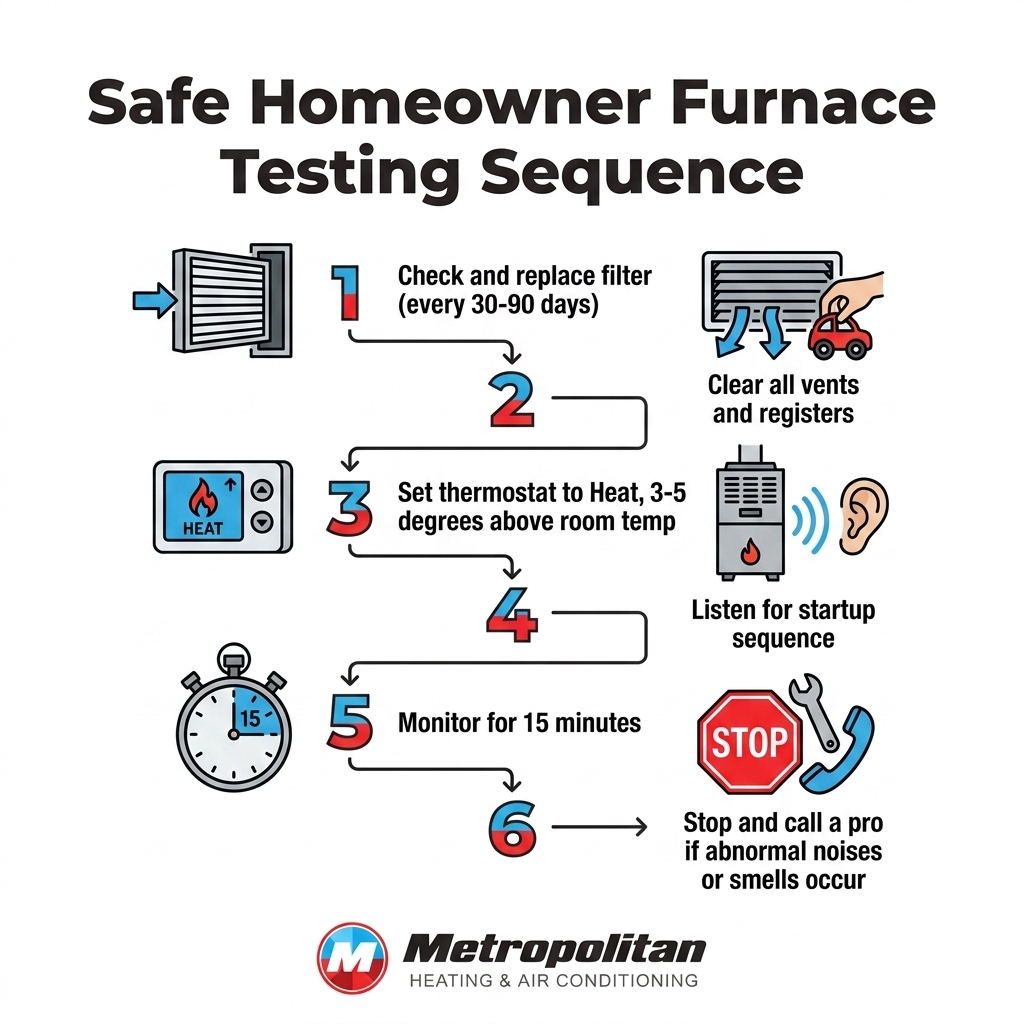
Follow this safe, step-by-step sequence to transition your system in Late August:
1. Clear all vents and registers: Walk through every room in your home. Ensure that no rugs, heavy furniture, or curtains were moved over the floor registers during the summer. Blocked vents create dangerous back-pressure in the ductwork.
2. Switch the thermostat mode: Move the system selector switch from "Cool" to "Heat." Ensure the fan setting is on "Auto" rather than "On," so the blower only runs when the furnace is actively heating.
3. Set the target temperature: Adjust the thermostat to 3 to 5 degrees higher than the current room temperature. This creates a clear demand for heat and forces the system to initiate its startup sequence.
4. Listen to the sequence of operations: Stand near the furnace (without opening any panels). You should first hear a small motor (the draft inducer) spin up. Next, you may hear a faint click or hum as the igniter warms up, followed by the soft "whoosh" of the gas burners igniting. Finally, after a short delay, the large main blower fan will engage to push the warm air through the house.
5. Monitor for 15 minutes: Let the system run for a full quarter of an hour. Walk to the furthest register in the house and hold your hand over it. The air should feel consistently warm, and the airflow should be steady.
Thermostat Calibration Check
Before initiating the test, verify that your thermostat is actually capable of communicating with the furnace. If you have a battery-operated thermostat, Late August is the perfect time to install fresh batteries. A low battery might have enough power to run the digital display but lack the voltage required to send the signal to the furnace control board. Additionally, use a standalone room thermometer to confirm that your thermostat is accurately reading the ambient temperature. If the thermostat thinks the room is warmer than it actually is, it will never signal the furnace to turn on.
Decoding the First Startup: The "Burning Dust" Smell
One of the most frequent concerns our dispatchers at Metropolitan Heating & Air Conditioning hear during these initial Late August furnace tests is a sudden, alarming odor. Within minutes of the heat turning on, the house may fill with a distinct smell that mimics something burning. In our years of taking these late-summer calls, we always reassure homeowners that in the vast majority of cases, this is completely normal and no cause for panic.
The science behind this phenomenon is straightforward. Throughout the long cooling season, microscopic dust particles, pet hair, and airborne debris settle onto the surface of the furnace's heat exchanger. Because the heat exchanger remains cold all summer, this debris simply accumulates. When you finally turn the heat on, the metal heat exchanger rapidly reaches extreme temperatures, instantly incinerating the settled dust. This creates the "burning dust" smell.
Normal vs. Abnormal Furnace Odors
While the dust smell is harmless, it is vital to distinguish it from odors that indicate a severe mechanical or safety failure. If the normal dust smell is overwhelming, simply open a few windows for 10 to 15 minutes to ventilate the home.
• Slight burning dust or singed hair — Likely Cause: Summer dust burning off the heat exchanger. — Required Homeowner Action: Normal operation. Ventilate the home; smell should fade in 15-30 minutes.
• Acrid, melting plastic or electrical burning — Likely Cause: Overheating wire insulation or a failing blower motor. — Required Homeowner Action: Shut the system down immediately at the thermostat and call for service.
• Rotten eggs or sulfur — Likely Cause: A natural gas leak near the furnace or gas valve. — Required Homeowner Action: Evacuate the home, leave doors open, and call emergency services/gas provider.
A healthy system will clear the burning dust smell quickly. If the odor persists for longer than an hour, or if it returns every single time the furnace cycles on, it may indicate a deeper issue with the filtration system or a heavily soiled internal cabinet that requires professional cleaning.
Drawing the Line: When to Call for Ajax HVAC Services
The purpose of the homeowner test is to verify basic operation, not to perform mechanical maintenance. There is a strict boundary between what is safe for a resident to handle and what requires licensed expertise. In Ajax lakefront communities, the damp air can accelerate wear on electrical contacts and metal components, making professional oversight essential.
Your intervention should be strictly limited to checking the thermostat, replacing the air filter, ensuring clear vents, and monitoring the system's sound and airflow. You must never open the sealed furnace cabinet, attempt to clean the delicate gas burners, handle high-voltage electrical components, or tamper with the exhaust venting. Doing so is incredibly dangerous and can easily compromise the safety of your home, risk carbon monoxide exposure, and void your manufacturer's warranty.
Signs Your System Failed the Homeowner Test
If your system exhibits any of the following symptoms during your Late August test, shut the thermostat off immediately. These are clear indicators that internal diagnostics, combustion analysis, and mechanical adjustments are required by our licensed technicians providing Ajax HVAC services:
• Short-cycling: The furnace turns on, runs for less than three minutes, and shuts off abruptly before the house warms up.
• Cold air blowing: The blower fan runs continuously, but the air coming from the vents remains cold, indicating a failure in the ignition sequence or gas valve.
• Loud, abnormal noises: Banging, booming, grinding, or high-pitched squealing sounds point to delayed gas ignition or failing motor bearings.
• Total unresponsiveness: The thermostat is set correctly, but the furnace remains completely silent and refuses to engage.
When you encounter these symptoms, the safest and most effective step is to hand the diagnostic process over to a trained technician who possesses the specialized tools required to safely test gas pressures and electrical loads.
The Value of Proactive Late Summer Maintenance
Transitioning from a basic homeowner test to comprehensive, professional seasonal maintenance is the key to uninterrupted comfort. Catching a failing component in Late August is a minor inconvenience; discovering that same failure on a freezing night in October is a full-blown emergency. Proactive maintenance allows a technician to inspect the heat exchanger for microscopic cracks, test the flame sensor, and ensure the draft inducer is safely venting combustion gases outside.
Just last fall, our team responded to a local Ajax homeowner who had recurring issues when trying to turn on the heat for the first time. Because they caught the problem early in the season and called us, a Metropolitan Heating & Air Conditioning technician was able to quickly and efficiently service the furnace to get it working perfectly before the real cold hit. Early detection provides options.
Planning for the Future: Repair vs. Replace
If your system is older and struggles during the initial test, scheduling a professional evaluation now gives you the luxury of time. You can weigh the benefits of repairing an aging unit against the long-term savings of planning for a new furnace installation in Ajax. Making this decision in August or September means you avoid the pressure of an emergency replacement. Additionally, our team can help you identify generally applicable energy rebates or utility incentive programs that may apply to qualifying high-efficiency installations, allowing you to maximize your investment.
Furthermore, scheduling your tune-up before the peak fall rush ensures you secure a preferred appointment time that fits your schedule. A freshly tuned system operates at peak efficiency, utilizing less energy to produce the same amount of heat. This optimized performance reduces unnecessary strain on the equipment and keeps your home consistently comfortable throughout the long winter.
Ensure a Seamless Transition to Fall Heating
Preparing your home for the shifting seasons doesn't have to be stressful. By taking the time to safely test your heating system now, you secure the peace of mind that comes from knowing your equipment is ready to handle the damp lakeside chill. Remember the clear boundary: perform your visual checks and filter replacements safely, but leave the internal diagnostics and mechanical tune-ups to the licensed experts.
Don't wait for the first freezing night to discover your furnace needs attention. Secure a comprehensive preventative maintenance plan with Metropolitan Heating & Air Conditioning today to ensure your system operates safely, efficiently, and reliably as the seasons change.
Frequently Asked Questions
When should I turn on my furnace for the first time in Ajax?
You should run a brief test of your furnace in late summer, typically around late August or early September. Testing the system before the weather turns consistently cold allows you to identify any hidden issues while the weather is still mild. For lakeside homes that experience rapid evening temperature drops, early testing ensures you aren't caught off guard by a sudden chill.
How do I test my furnace before winter safely?
To test your furnace safely, start by replacing the air filter and ensuring all household vents are unblocked. Switch your thermostat to the heating mode and set it a few degrees above the current room temperature. Listen for the system to start up smoothly and monitor the vents for 15 minutes to confirm warm air is flowing. Never open the furnace cabinet or attempt to inspect internal components yourself.
Why does my heater smell like burning dust when I turn it on?
The burning dust smell occurs because airborne particles settle on the furnace's heat exchanger during the months it sits idle. When the heat exchanger rapidly warms up during the first cycle of the season, this settled dust is instantly burned off. The odor is completely normal and should dissipate naturally within 15 to 30 minutes of operation.
What temperature should I set my thermostat in the fall?
A comfortable and energy-efficient fall thermostat setting is generally around 20 to 21 degrees Celsius (68 to 70 degrees Fahrenheit) when you are home and awake. You can lower the temperature slightly at night or when you are away to conserve energy. Finding the right balance depends on your personal comfort preferences and the specific humidity levels in your home.
How does the Lake Ontario micro-climate affect my HVAC system's transition?
The proximity to Lake Ontario creates a micro-climate characterized by high humidity and rapid temperature drops in the evening. This means your HVAC system may need to run the air conditioner during a hot afternoon and switch to heating shortly after sunset to combat the damp chill. This constant cycling puts extra strain on the equipment, making proactive seasonal maintenance absolutely essential for lakeside homes.
Schedule Expert Service
Or Contact Us
Other Blogs
testimonials
hear what our satisfied clients have to say

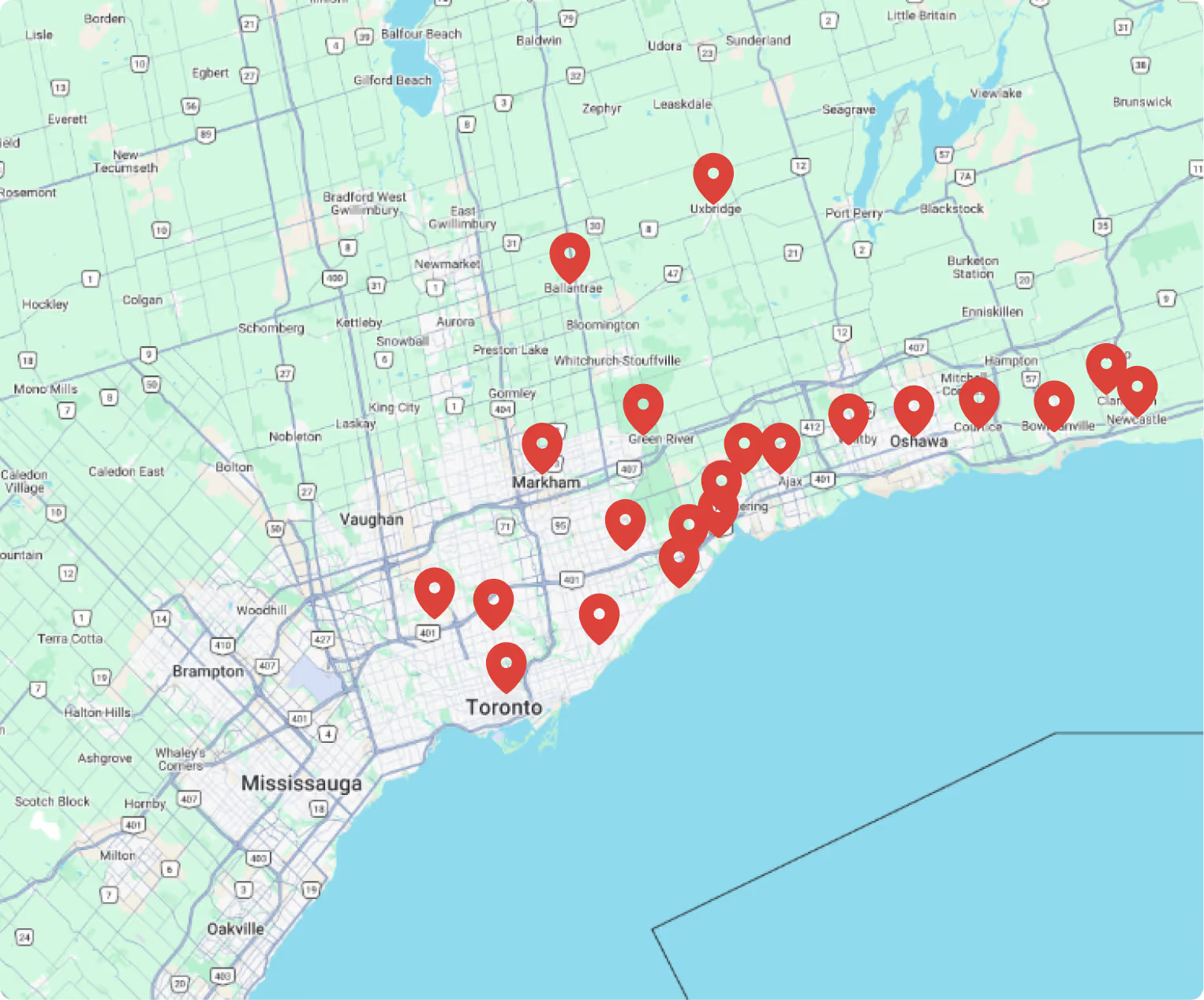
where we operate
Service areas
contact us
Let’s get in touch!