
Restore Your Hot Water Supply Without Delay
Waking up to an icy shower or discovering a puddle around your utility tank disrupts your entire routine and poses potential damage risks to your property. Contact us immediately to schedule a diagnostic visit or discuss financing options for a new system. Metropolitan Heating & Air Conditioning understands that water heater failures in Scarborough require urgent attention, especially during our harsh winters. Our licensed technicians provide rapid repairs and precision installations to ensure your home remains functional and comfortable.
- Upfront pricing structures with absolutely no hidden costs.
- High-efficiency system options designed to lower monthly utility bills.
- Enjoy peace of mind with our licensed service and comprehensive warranties on parts and labor.
Comprehensive Diagnostics and Immediate Repair Solutions
When you engage a professional service for water heater issues, the primary goal is accurate identification of the fault followed by a lasting solution. Technicians arrive fully equipped to handle both gas and electric models, ensuring that common failure points are addressed on the first visit whenever possible. The scope of service covers everything from minor component replacements to major system overhauls.
Upon arrival, the diagnostic process begins with a thorough inspection of the unit’s safety and performance metrics. This includes testing the thermostat for calibration accuracy, inspecting the burner assembly for proper combustion, and checking the pressure relief valve to ensure it operates within safety standards. For gas units, venting systems are scrutinized to prevent carbon monoxide leaks, a critical safety step for any home.
Common repair services often involve replacing specific components rather than the entire unit.
- Thermocouple and Pilot Light Repair: If a gas water heater fails to ignite, the thermocouple is often the culprit. This sensor detects the pilot flame and shuts off gas flow if the flame goes out. Replacing a faulty thermocouple restores the unit’s ability to heat water safely.
- Heating Element Replacement: In electric water heaters, the upper or lower heating elements can burn out, resulting in lukewarm water or a total loss of heat. Technicians can swap these out quickly to restore full heating capacity.
- Anode Rod Inspection and Replacement: The anode rod is a sacrificial component that attracts corrosion to protect the tank lining. Replacing a depleted anode rod can significantly extend the lifespan of the current unit.
- Flushing and Sediment Removal: Over time, minerals from the water supply settle at the bottom of the tank. This sediment creates a barrier between the heat source and the water, forcing the unit to work harder. Professional flushing removes this buildup, reducing popping noises and improving efficiency.
- Dip Tube Replacement: The dip tube directs incoming cold water to the bottom of the tank to be heated. If this tube disintegrates, cold water mixes with the hot water at the top of the tank, causing a drop in water temperature.
The Installation and Replacement Process
When a repair is no longer feasible or cost-effective, a systematic replacement process ensures the new unit operates at peak efficiency. This process is designed to minimize disruption to the household while adhering to all safety protocols and manufacturer specifications.
- Site Assessment and Sizing: The process begins with calculating the hot water demand of the household. Factors such as the number of bathrooms, the size of the bathtub, and peak usage times determine whether a 40, 50, or 60-gallon tank; or a tankless system, is required.
- Safe Disconnection: Power or gas supplies are shut off, and the water supply is isolated. The existing tank is drained completely using a hose connected to the drain valve. For gas units, the venting pipe is carefully disconnected to avoid damaging the chimney liner or sidewall vents.
- Removal and Disposal: The old unit is heavy and often filled with residual sediment. It is carefully removed from the property, and disposal is handled according to environmental regulations, ensuring old metal and components are recycled where possible.
- Positioning and Leveling: The new unit is positioned in a drip pan to catch potential future leaks. It is crucial that the tank is perfectly level to ensure proper operation of sensors and burners. Seismic strapping may be applied if required by local code or for added stability.
- Connection of Utilities: Water lines are reconnected, often using dielectric unions to prevent galvanic corrosion between dissimilar metals (like copper and steel). The gas line or electrical wiring is connected, and joint compound is used on gas threads to ensure a leak-proof seal.
- Venting and Safety Checks: For gas models, the draft hood and vent pipes are secured with sheet metal screws and foil tape. This step is vital to ensure exhaust gases are expelled outside.
- Filling and Testing: The tank is filled with water, and a hot water tap is opened to bleed air from the system. Once full, the power or gas is turned on, and the unit is monitored through a full heating cycle to verify that the thermostat shuts off at the set temperature.
Determining When to Upgrade Versus Repair
Homeowners often struggle with the decision of whether to sink money into a repair or invest in a new system. While repairs are often cheaper upfront, an aging unit can become a money pit. There are specific indicators that signal replacement is the smarter financial move.
- Age of the Unit: Most tank-style water heaters have a lifespan of 10 to 15 years. If a unit is over 12 years old and requires a significant repair, replacement is generally recommended to avoid throwing good money after bad.
- Leaking Tank: If water is pooling around the base of the heater and the source is the tank itself (not a loose valve or pipe), the unit must be replaced immediately. A compromised tank cannot be patched and poses a risk of flooding.
- Rusty Water: If hot water comes out of the tap with a reddish-brown tint, it indicates the inside of the tank is rusting. This usually means the glass lining has failed, and a leak is imminent.
- Rising Energy Bills: As water heaters age, they lose insulation value and accumulate scale, causing them to run longer to heat the same amount of water. Metropolitan Heating & Air Conditioning often recommends high-efficiency models or tankless upgrades in these scenarios to offset the initial cost through long-term utility savings.
- Insufficient Hot Water: If the unit can no longer keep up with normal household demand, it may be undersized for current needs or suffering from irreversible sediment buildup. Upgrading to a larger tank or a continuous flow tankless system solves this capacity issue.
Tankless vs. Storage Tank Solutions
The choice between traditional storage tanks and modern tankless systems depends on usage patterns and infrastructure.
- Storage Tank Heaters: These are the most common and generally have a lower upfront cost. They store a specific volume of hot water ready for use. They are simpler to install as a direct replacement for an existing tank but are limited by their gallon capacity. Once the hot water is depleted, there is a recovery period before more is available.
- Tankless Water Heaters: These units heat water on demand, passing it over a powerful heat exchanger. They offer an endless supply of hot water, making them ideal for large families or homes with high-volume luxury showers. While the installation cost is higher due to requirements for larger gas lines and dedicated venting, they are significantly more energy-efficient because they eliminate standby energy loss, heating water only when a tap is turned on.
Navigating Local Climate and Utility Requirements
Operating a water heater in this region presents specific challenges due to the climate and local infrastructure. Understanding these nuances ensures that the installed equipment performs reliably year-round.
- Hard Water Considerations: The water supply in this area contains dissolved minerals like calcium and magnesium. When heated, these minerals precipitate out of the water and form scale on heating elements and the bottom of the tank. This scale acts as an insulator, reducing efficiency and causing overheating of the tank bottom. Regular maintenance, such as flushing the tank annually, is critical here to prevent premature failure.
- Winter Venting Challenges: For high-efficiency power-vented units, the intake and exhaust pipes typically run out the side of the house. During heavy snowfall or ice storms, these vents can become blocked, causing the water heater to shut down as a safety precaution. Homeowners must ensure these external vents remain clear of snow drifts.
- Gas Code Compliance: Ontario maintains strict codes regarding gas appliances. This includes requirements for gas piping materials, venting clearances, and the installation of dirt pockets (drip legs) on gas lines. Any replacement involving gas work requires a technician with a valid TSSA (Technical Standards and Safety Authority) certificate to ensure the installation is legal and insurable.
- Mixing Valves: To prevent scalding while maintaining a high enough tank temperature to kill Legionella bacteria (140°F/60°C), local codes often require the installation of a mixing valve. This device mixes cold water with the hot water leaving the tank to deliver a safe temperature (usually 120°F/49°C) to the faucets.
Technical Expertise and Service Reliability
Choosing the right service provider is just as important as choosing the right equipment. The longevity of a water heater is heavily dependent on the quality of the installation. Poor soldering, incorrect venting, or improper gas pressure adjustments can lead to frequent breakdowns and safety hazards.
Professional technicians arrive with trucks stocked with universal parts, allowing them to complete most repairs immediately without waiting for supply house runs. This efficiency is vital when hot water is unavailable. Furthermore, professional service includes the protection of your home. Drop cloths are used to protect flooring, and old equipment is removed without damaging walls or door frames.
A focus on energy efficiency helps homeowners navigate the various ratings, such as the Uniform Energy Factor (UEF). Higher UEF ratings indicate better heat retention and transfer. Moving from a standard atmospheric vent heater to a condensing tankless model or a hybrid electric heat pump water heater can drastically reduce energy consumption.
Finally, relying on licensed professionals ensures that all warranty requirements are met. Manufacturers strictly adhere to their warranty terms, which often state that the warranty is void if the unit is not installed by a certified professional. This protects the homeowner’s investment and ensures support is available should a manufacturing defect occur. Choosing the right service provider is key to ensuring this long-term reliability.
Secure Your Comfort Today
Do not let a failing water heater disrupt your life or endanger your home with leaks. Whether you need a quick repair to get the hot water flowing again or a full system replacement to improve energy efficiency, expert help is available. Metropolitan Heating & Air Conditioning is ready to provide the skilled service required to handle any make or model.
Schedule your service visit now to restore reliable hot water to your home.
Schedule Expert Service
Or Contact Us
testimonials
hear what our satisfied clients have to say

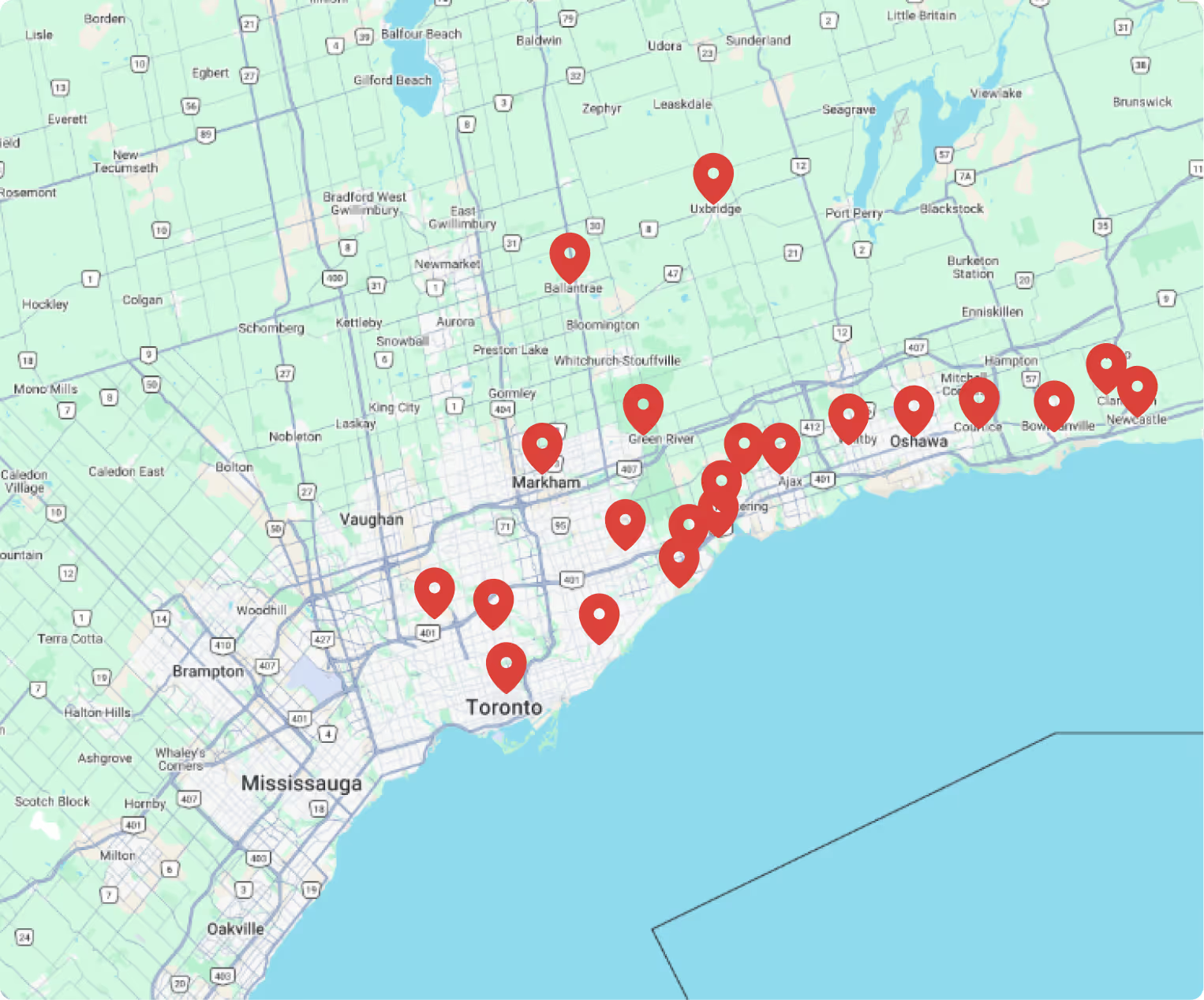
where we operate
Service areas
contact us
Let’s get in touch!