
The Winter Myth: Why Cold Weather Doesn't Treat All Commercial Furnaces Equally
Many property owners operate under a common misconception: a freezing day outside means the same level of stress for all heating equipment, regardless of where it is installed. The reality of Rooftop vs. Basement Furnaces: Why Commercial Units Fail Differently During Deep Freezes comes down to the brutal physics of environmental exposure. When temperatures plummet, the physical location of a commercial furnace dictates exactly how, why, and when it might fail.
This is a critical concrete problem for facility managers. You cannot maintain an exposed outdoor unit the same way you maintain a sheltered indoor unit. Recognizing these unique vulnerability profiles is the key decision point for implementing effective preventative maintenance and avoiding catastrophic mid-winter shutdowns.
A basement unit operates within a relatively stable, sheltered environment, protected from the harshest elements. In stark contrast, a rooftop system faces brutal exposure to wind chill, driving snow, and rapid temperature fluctuations. For those managing commercial HVAC systems, understanding these distinct mechanical realities is the first step toward keeping your building warm, your tenants safe, and your operational costs predictable.
The Brutal Reality of Rooftop Furnace Exposure During Extreme Cold
Commercial Rooftop Units (RTUs) are marvels of space-saving engineering, but they sit directly in the line of fire during a January deep freeze in Scarborough. Because of their proximity to Lake Ontario, these units do not just deal with dropping ambient temperatures; they battle wet, wind-driven snow and aggressive wind chills that fundamentally alter how the machinery operates.
When severe winter weather strikes, the mechanical stresses on an exposed RTU compound rapidly. Here is exactly how extreme cold dismantles an unprepared rooftop system:
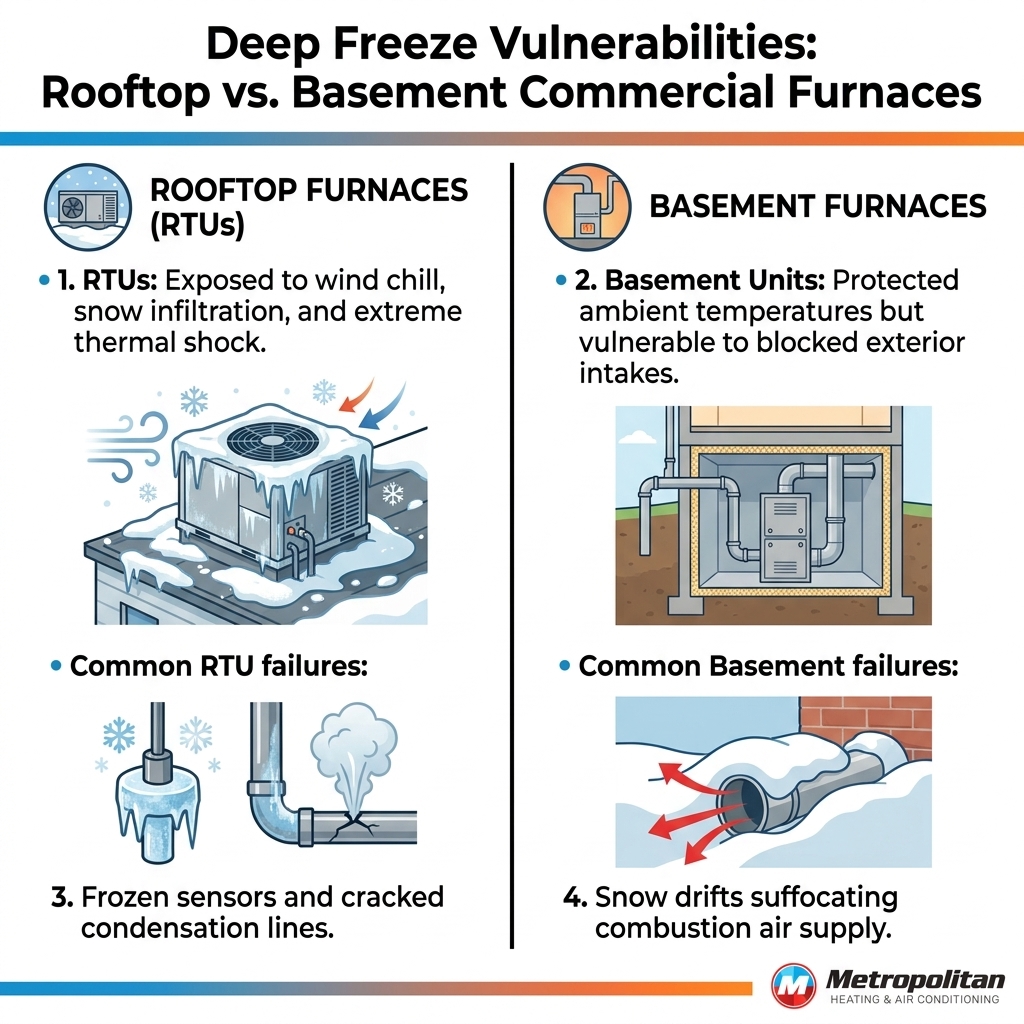
1. Accelerated Heat Loss and Freezing Lines: Wind chill strips heat away from the unit's metal exterior faster than still air. This rapid heat loss causes internal components, particularly condensation lines, to freeze solid and potentially crack before the system can drain properly.
2. Snow Infiltration and Ice Damming: Wind-driven snow easily bypasses standard louvers, packing into air intakes. As the unit cycles on and off, this snow melts and refreezes, creating thick ice dams that choke off necessary airflow and trap moisture inside the cabinet.
3. Severe Thermal Shock: RTUs experience violent temperature swings. The heat exchanger fires up to hundreds of degrees, while the metal cabinet outside remains well below freezing. These rapid freeze-thaw cycles place immense stress on metal components and sensitive electronic sensors, leading to premature wear and false limit-switch trips.
4. Total Environmental Overwhelming: In extreme scenarios, the combination of blocked intakes, frozen sensors, and restricted airflow causes the unit to shut down entirely to prevent a fire hazard, leaving the building without heat.
These breakdowns are not theoretical. During one particularly brutal winter cold snap with a -30 windchill, a local commercial customer reached out when their rooftop furnace failed completely. The severe weather had overwhelmed the aging unit, triggering an emergency response. A technician diagnosed the catastrophic failure, and a full replacement was installed the very next business day to get the building's heat restored quickly. This is why specialized commercial heating services are critical for exposed rooftop equipment.
Basement Furnaces: Climate-Controlled Stability vs. Hidden Intake Risks
If rooftop units fight a visible battle against the elements, basement furnaces fight a hidden one. The primary advantage of a basement commercial unit is obvious: it operates in a relatively stable, climate-controlled ambient temperature. The metal cabinet is not blasted by sub-zero winds, and the internal sensors are not subjected to violent thermal shock.
However, this sheltered environment often lulls facility managers into a false sense of security. While the main cabinet sits safely indoors, the furnace still relies entirely on the outside world to function. High-efficiency commercial basement furnaces require dedicated exterior PVC pipes to draw in fresh combustion air and safely vent dangerous exhaust gases outside.
This creates a highly specific winter vulnerability. In Scarborough commercial districts, ground-level snow accumulation patterns and drifting are a constant threat. Snowplows clearing parking lots or strong winds sweeping across flat commercial properties can easily push deep snow drifts directly against the building's exterior walls.
The Suffocation Risk
If a snowdrift blocks the combustion air intake pipe, the furnace cannot draw the oxygen it needs to burn fuel. Modern commercial systems are equipped with safety pressure switches that detect this lack of airflow. The moment the intake is blocked, the furnace will automatically lock itself out and shut down to prevent incomplete combustion and carbon monoxide buildup.
The maintenance focus for basement units shifts away from heavy weatherization and moves entirely toward ensuring clear airflow pathways. You do not need crankcase heaters or heavy cabinet insulation, but you absolutely must maintain a strict clearing protocol for exterior vents after every major snowfall.
Side-by-Side Breakdown: Rooftop vs. Basement Deep Freeze Failure Points
Understanding how these two systems fail differently allows property managers to allocate their maintenance resources effectively. While both systems will shut down if neglected, the root causes of those shutdowns are entirely different.
Here is a direct comparison of the unique vulnerability profiles for exposed and sheltered commercial heating systems:
• Sensor Vulnerability — Rooftop Units (RTUs): Highly exposed to wind chill; prone to freezing and false limit trips. — Basement Units: Protected indoors; rarely affected by ambient cold.
• Moisture Threats — Rooftop Units (RTUs): Ice damming from wind-driven snow infiltrating the cabinet. — Basement Units: Blocked exterior PVC intake and exhaust pipes from deep snow drifts.
• Temperature Stress — Rooftop Units (RTUs): Extreme thermal shock on heat exchangers due to rapid freeze-thaw cycles. — Basement Units: Stable ambient operation; minimal thermal expansion stress.
• Condensation Lines — Rooftop Units (RTUs): High freezing risk; often requires dedicated internal heaters. — Basement Units: Minimal freezing risk as lines run through heated indoor spaces.
By recognizing these distinct failure pathways, you can stop treating all commercial furnaces with a one-size-fits-all maintenance approach and start protecting them based on their actual environmental risks.
How Commercial Unit Placement Impacts Building Health in Winter
The mechanical placement of your commercial furnace does more than just dictate how it might break down; it directly influences the overall comfort and air quality inside your building envelope during the winter months.
Rooftop units are designed to pull in a specific percentage of fresh outdoor air to mix with the return air from the building. During a deep freeze, this means the RTU is actively pulling in sub-zero air. The system requires significant energy to heat this freezing air up to a comfortable room temperature. If the unit is struggling due to thermal shock or blocked intakes, it cannot heat the air adequately, leading to cold drafts and uneven heating across different zones of your commercial space.
Furthermore, if wind-driven moisture has bypassed the RTU's outer panels, that dampness can be introduced into the ductwork. Conversely, basement units manage air circulation and draft dynamics differently. Because the main unit sits inside, it draws return air from within the building envelope, which is already partially conditioned.
The Role of Filtration
Regardless of placement, system strain from a deep freeze directly diminishes air quality. When a furnace works overtime to compensate for extreme cold, it moves a massive volume of air through the filter media. Maintaining clean filters and clear intakes is critical to prevent stale winter air circulation and protect your indoor air quality. A clogged filter on a struggling RTU forces the blower motor to pull harder, which can suck freezing air through unsealed gaps in the cabinet, completely bypassing the filter and distributing dust and cold air throughout your office or retail space.
Professional Winterization: Protecting Your Commercial Heating Investment
Preventing these cold-weather catastrophes requires professional intervention long before the first major freeze hits. Commercial heating systems are complex, high-voltage machines that require specialized diagnostics. General facility maintenance staff can clear snow away from ground-level vents, but internal mechanical winterization requires certified commercial technicians.
Rooftop Specific Winterization Needs:
Because of their extreme exposure, RTUs require aggressive defensive measures. Technicians must verify the installation and integrity of snow hoods over fresh air intakes. They must test and calibrate crankcase heaters, which keep the compressor oil warm and fluid during sub-zero temperatures. Finally, professionals must inspect all cabinet seals and weatherstripping to ensure wind-driven snow cannot penetrate the electrical compartments.
Basement Specific Winterization Needs:
For sheltered units, the focus shifts to combustion safety and drainage. Technicians must verify that combustion air intake clearances meet local codes and that exhaust pipe integrity is uncompromised. They also check the internal condensate traps and drain lines to ensure they are flowing freely and are not at risk of backing up into the heat exchanger.
Proactive, pre-season commercial maintenance is the only proven way to prevent mid-winter emergency shutdowns. Investing in commercial cooling and HVAC solutions year-round ensures that when the temperature drops, your equipment is calibrated, sealed, and ready to handle the load.
Local Diagnostics: What Happens When Commercial Systems Break Down
When a severe cold snap hits the region, the difference between a minor inconvenience and a major operational disaster comes down to triage and rapid response. Losing heat in a large commercial facility does not just make employees uncomfortable; it puts inventory, plumbing, and sensitive equipment at immediate risk.
The triage process begins the moment a call comes in. Technicians must first determine the unit type and the specific safety protocols required. Diagnosing an iced-over RTU on a slippery, wind-swept commercial roof requires vastly different safety gear and approaches than diagnosing a basement unit that has locked out due to a suffocated intake pipe.
Rapid response times are absolutely critical to prevent secondary building damage, such as frozen and burst water pipes in exterior walls. Our team's real-world emergency service experience means we understand the specific ways local weather patterns dismantle commercial equipment, allowing for faster, more accurate diagnostics.
For example, a couple of weeks before Christmas, a local business lost heat entirely during a harsh winter cold stretch. Because a rapid response is vital, a technician was dispatched the exact same day. They quickly diagnosed the furnace failure, secured the necessary parts, and repaired the system before the building's internal temperature could drop to dangerous levels. Having trusted Scarborough HVAC technicians on call ensures that when extreme weather emergencies happen, your facility is protected by professionals equipped to handle them efficiently.
Frequently Asked Questions About Commercial Winter Heating Failures
Why do commercial rooftop units fail in extreme cold?
Commercial rooftop units fail in extreme cold primarily due to their direct exposure to harsh environmental elements. Wind chill accelerates heat loss, causing internal condensation lines and sensors to freeze solid. Additionally, wind-driven snow can bypass intake louvers, melting and refreezing inside the cabinet to create ice dams that restrict necessary airflow and trigger safety shutdowns.
How does wind chill affect rooftop HVAC?
Wind chill strips ambient heat away from the metal exterior of a rooftop HVAC unit much faster than still air. This rapid heat loss can cause the unit's internal cabinet temperature to drop below the operating threshold of sensitive electronic components. It also increases the risk of thermal shock on the heat exchanger, as the metal expands and contracts violently during heating cycles.
What causes a commercial furnace to freeze?
A commercial furnace typically freezes when moisture inside the system is exposed to sub-zero temperatures without proper drainage or heating. In high-efficiency units, condensation is a normal byproduct of combustion. If the drain lines are exposed to extreme cold or if internal crankcase heaters fail, that condensation turns to ice, blocking the system and causing a complete shutdown.
Are basement furnaces better for commercial buildings?
Basement furnaces offer the distinct advantage of operating in a climate-controlled environment, shielding them from wind chill and thermal shock. However, they are not universally "better," as they take up valuable indoor square footage and rely on exterior PVC intake pipes. These pipes are highly vulnerable to being blocked by ground-level snow drifts, which will suffocate the unit and cause it to lock out.
How can facility managers prevent RTU ice damming?
Facility managers can prevent RTU ice damming by scheduling professional winterization before the cold weather arrives. Certified technicians can install protective snow hoods over fresh air intakes and ensure that all cabinet weatherstripping is fully sealed. Regular inspections during the winter are also necessary to verify that internal defrost controls and crankcase heaters are functioning correctly.
Secure Your Commercial Heating Before the Next Cold Snap
Understanding your commercial unit's specific vulnerabilities is the single most important step in preventing costly winter downtime. Whether you rely on an exposed rooftop unit battling wind chill or a sheltered basement furnace relying on clear intake vents, extreme cold will always find the weakest point in your system.
Do not wait for a deep freeze to test the limits of your equipment. A professional inspection can evaluate your system's winter readiness, identify failing sensors, and secure your cabinet against the elements. Protect your property, your tenants, and your peace of mind by reaching out for comprehensive commercial heating services today.
Schedule Expert Service
Or Contact Us
Other Blogs
testimonials
hear what our satisfied clients have to say

where we operate
Service areas
contact us
Let’s get in touch!