

The True Price of a Fast Swap
According to the Department of Energy, improper installation can slash system efficiency by up to 30%. That is a staggering loss of performance right out of the gate, and it happens far more often than most homeowners realize. When your equipment fails, the temptation to choose the contractor promising the fastest turnaround is incredibly strong. However, the hidden cost of rushing an HVAC installation often reveals itself weeks or months later in the form of premature breakdowns, uneven airflow, and excess energy consumption.
Working in homes across Scarborough and the Greater Toronto Area (GTA), our technicians at Metropolitan Heating & Air Conditioning frequently see the aftermath of a suspiciously fast, one-day swap that leaves homeowners with a system that struggles to keep up with the weather. The reality is that premature failures and poor temperature control are the direct result of skipping crucial, time-consuming technical steps. Choosing a methodical professional to handle your HVAC systems ensures the equipment is sized, sealed, and tested correctly for long-term reliability. A proper professional furnace installation or cooling setup requires time, exact specifications, and a strict refusal to cut corners.
The Anatomy of a Rushed Installation
What exactly happens behind the scenes when a contractor prioritizes speed over exact specifications? The short answer is that fast installations almost always mean technical corners are being cut. When a crew is rushing to move on to their next job, the meticulous details required for a flawless setup are the first things to go.
Common shortcuts include skipping necessary municipal permits, utilizing cheap or recycled materials, and ignoring manufacturer-specific guidelines. These missing steps might not be obvious on day one. Your home might feel comfortable initially, but these invisible omissions create a ticking clock for the equipment. A system that isn't calibrated properly will work twice as hard to deliver half the comfort, wearing out internal components long before their expected lifespan.
• Preparation — The Rushed Approach: Uses existing connections without inspecting for wear or leaks. — The Methodical Approach: Thoroughly evaluates all existing electrical and ductwork connections.
• Material Quality — The Rushed Approach: Reuses old wiring, disconnect boxes, or degraded line sets to save time. — The Methodical Approach: Replaces worn components with fresh, manufacturer-approved materials.
• Testing — The Rushed Approach: Turns the unit on, checks for air coming out of the vent, and leaves. — The Methodical Approach: Measures static pressure, airflow balance, and exact refrigerant charge.
• Cleanliness — The Rushed Approach: Leaves old debris, dust, and packaging materials behind. — The Methodical Approach: Treats the home with respect, leaving the mechanical room spotless.
Why 'Same-Day' Can Be a Red Flag
While emergency replacements are sometimes necessary during peak summer cooling and deep winter heating seasons, a standard standard installation requires thorough planning. Rushing the tear-out and fitment stages often leads to poor seals, excessive vibrations, and safety hazards. A crew that promises to have a complex system swapped out in just a few hours is likely skipping the exact technical steps required to protect your investment.
The Load Calculation Step You Can't Skip
One of the most critical phases of any new installation happens before the equipment even arrives at your home. Many fly-by-night contractors skip Manual J load calculations entirely to save time, relying instead on a dangerous guessing game. They simply look at the size of your old unit and order a new one with the exact same capacity.
Assuming the previous unit was sized correctly ignores any changes that have happened to your home over the last fifteen to twenty years. Upgraded insulation, new energy-efficient windows, finished basements, or changes in the home's layout all drastically alter your thermal load. Through our extensive work evaluating homes across Scarborough and the Greater Toronto Area (GTA), we know firsthand that skipping this calculation is a costly mistake.
Oversized units are just as problematic as undersized ones. An oversized air conditioner will cool the house down too quickly and shut off before it has a chance to pull humidity out of the air. This short-cycling leaves your home feeling cold but clammy, and the constant starting and stopping wears out the compressor prematurely. Conversely, undersized units run constantly, driving up utility bills without ever reaching the desired temperature on your thermostat. A methodical installer takes the time to measure your home, evaluate your insulation, and calculate the precise load required for perfect comfort.
Critical Refrigerant and Airflow Testing
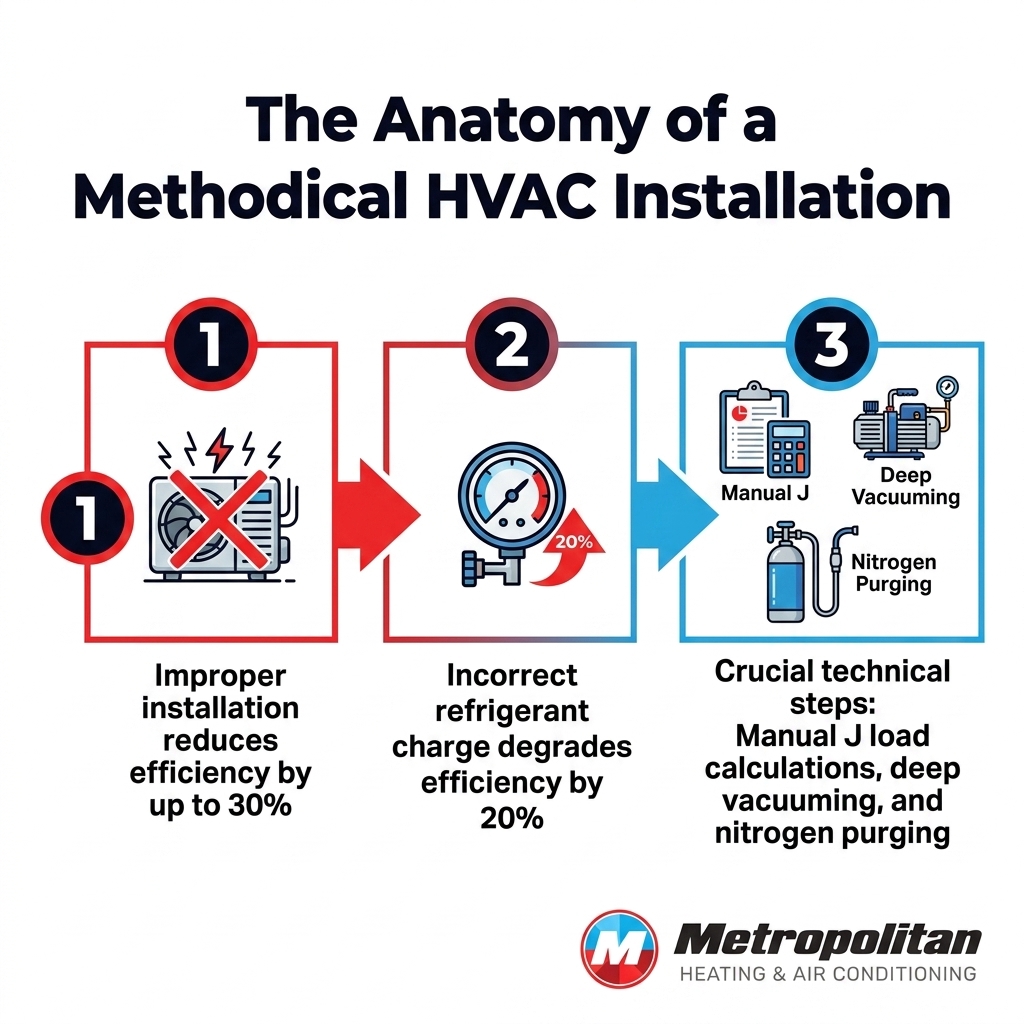
The physical placement of the equipment is only a small part of a complete installation. The most critical work happens inside the copper lines and the ductwork. According to the Department of Energy, an improper refrigerant charge can degrade system efficiency by up to 20%. Achieving the perfect charge requires patience, specialized tools, and a series of technical steps that simply cannot be rushed.
A proper air conditioning installation involves several complex procedures that protect the internal components of the system from day one. For example, our team at Metropolitan Heating & Air Conditioning recently stepped in to help a local homeowner who had purchased a new AC unit and coil directly but needed skilled professionals to handle the installation during the peak summer cooling season. We took over the project, taking the necessary time to clean the site, properly calibrate the coil, and execute every technical step required for a flawless setup.
Here is what our methodical testing and calibration process involves:
1. Nitrogen Purging: When copper lines are welded (brazed) together, the extreme heat creates black soot and oxidation inside the pipe. A methodical installer flows nitrogen gas through the lines during brazing to displace the oxygen, keeping the inside of the pipes perfectly clean. Rushed contractors skip this, allowing soot to break off and clog the system's delicate metering devices.
2. Pressure Testing: Before any refrigerant is added, the system is pressurized with nitrogen to check for microscopic leaks. The system must hold this pressure for a specific amount of time to prove the seals are completely airtight.
3. Deep Vacuuming: A vacuum pump is attached to the lines to pull out all air and moisture. This process takes time, often an hour or more depending on the size of the system, and is measured in microns to ensure a perfect vacuum.
4. Airflow Calibration: Finally, the blower motor speed is adjusted to match the static pressure of your ductwork, ensuring that every room receives balanced heating and cooling.
The Danger of Moisture in the Lines
Why is deep vacuuming so essential? If even a microscopic drop of moisture is left inside the copper lines, it will react with the chemical refrigerant and the compressor oil. This reaction creates a highly corrosive acid that slowly eats away at the compressor's internal windings from the inside out. Pulling a proper, deep vacuum is the only way to remove this moisture and prevent catastrophic internal damage. This step takes time, which is exactly why rushed contractors frequently cut it short.
The Hidden Toll on Ductwork and Air Flow
A brand new, high-efficiency system is only as good as the ductwork it connects to. If the delivery system is flawed, the best equipment in the world will still underperform. Rushed jobs often feature poorly taped joints, sloppy sheet metal transitions, or mismatched plenums that leak conditioned air straight into your utility room or basement.
The impact of air leaks: Air leaks not only waste energy by dumping heated or cooled air into unoccupied spaces, but they also create pressure imbalances within the home. When a return duct leaks, it can pull dust, debris, insulation particles, and humidity from unconditioned spaces directly into your living area. Taking the time to seal connections properly with mastic or foil tape protects both the equipment and the air you breathe.
In our experience working with homeowners across Scarborough and the Greater Toronto Area (GTA), ensuring a tight seal between the new unit and the existing ductwork is a critical part of protecting your indoor air quality. A methodical installer will inspect the plenum, design custom sheet metal transitions if necessary, and ensure that the airflow path is smooth and completely sealed. This attention to detail prevents the system from suffocating and ensures that the air circulating through your home remains clean and healthy.
How Extreme Weather Exposes Cut Corners
A poorly sealed or incorrectly sized system might seem perfectly fine on a mild spring day. When the weather is gentle, even a struggling system can manage to keep the house comfortable. However, extreme temperature swings push the equipment to its absolute limits, and that is exactly when cut corners are exposed.
Scarborough's deep winter freezes and hot, humid summers amplify the impact of minor installation flaws, making technical precision non-negotiable. When the temperature drops well below freezing, a furnace that hasn't been calibrated for proper gas pressure and combustion efficiency will struggle to maintain heat, potentially leaving your family in the cold. Likewise, during a severe summer heatwave, an oversized air conditioner will fail to manage the heavy indoor humidity, leaving the air feeling thick and uncomfortable.
• High Summer Heat & Humidity — Impact on a Rushed Installation: System short-cycles, failing to remove moisture. Air feels clammy and heavy. — Impact on a Methodical Installation: System runs in long, efficient cycles, effectively dehumidifying the home.
• Deep Winter Freezes — Impact on a Rushed Installation: Poor airflow calibration leads to cold spots, uneven heating, and overworked blowers. — Impact on a Methodical Installation: Balanced static pressure delivers consistent, even heat to every single room.
• Rapid Temperature Swings — Impact on a Rushed Installation: Poorly sealed duct transitions expand and contract, worsening air leaks over time. — Impact on a Methodical Installation: Properly secured and sealed sheet metal transitions remain airtight year-round.
When we provide reliable HVAC services in Scarborough, we always remind our customers that local climate extremes act as an immediate stress test for your equipment. Taking the time to execute a flawless installation ensures that your system is ready to handle the toughest days of the peak summer cooling and deep winter heating seasons without missing a beat.
The Value of an Unhurried, Methodical Approach
At Metropolitan Heating & Air Conditioning, we frequently fix the aftermath of fast, one-day installs performed by cut-rate contractors. We know firsthand from our years in the industry that an unhurried installation means exact specifications are met at every single phase of the project. Contrasting the common industry narrative of a "fast install" with our methodical process reveals a simple truth: taking the proper time upfront prevents the headache of constant callbacks and premature breakdowns.
During a recent spring season, we replaced a 28-year-old furnace for a local family. Instead of rushing the tear-out to get to the next job, our technicians took an unhurried approach. We meticulously removed the old unit, installed the new system to exact specifications, and took the time to answer every single question the homeowner had about their new equipment. The result was a neat, tidy installation and a system that runs perfectly.
Professionals take the time to respect your home. This means laying down drop cloths, thoroughly explaining the new system's features, demonstrating how to program the thermostat, and leaving the workspace cleaner than they found it. Methodical work is the only guaranteed way to secure optimal system lifespan, protect your warranty, and maximize your energy efficiency across Scarborough and the Greater Toronto Area (GTA).
Frequently Asked Questions About Installation Standards
What happens if an HVAC system is not installed properly?
An improperly installed HVAC system will suffer from reduced efficiency, uneven heating and cooling, and premature component failure. If critical steps like load calculations or refrigerant testing are skipped, the system works much harder than it should. Over time, this excess strain leads to frequent breakdowns and a significantly shortened lifespan.
How long should an HVAC installation take?
A standard HVAC installation typically takes a full day, ranging from 8 to 14 hours depending on the complexity of the job and the condition of the existing ductwork. Highly complex installations or full system replacements (both heating and cooling) may stretch into a second day. If a contractor promises to complete the job in just a few hours, it is a strong indicator that critical testing and calibration steps are being skipped.
What are the signs of a bad HVAC installation?
Common signs of a bad installation include strange noises, excessive vibration, uneven temperatures from room to room, and unusually high energy bills right after the system is put in. You might also notice poor airflow from the vents or physical signs of sloppy work, such as unsealed duct joints or messy wiring. During peak summer cooling and deep winter heating seasons, a poorly installed system will struggle to reach the temperature set on the thermostat.
Can a poorly installed HVAC system increase energy bills?
Yes, a rushed installation can drastically increase your monthly energy bills. If the system is incorrectly sized, improperly charged with refrigerant, or connected to leaky ductwork, it will consume significantly more electricity or gas to condition the home. The Department of Energy notes that installation flaws can reduce efficiency by up to 30%, which translates directly to wasted energy.
Why do some contractors promise same-day installations?
Some contractors use the promise of a same-day turnaround as a high-pressure sales tactic to win jobs quickly. While true emergencies sometimes require rapid response, standard installations require careful planning, precise measurements, and methodical execution. Contractors who consistently rush jobs are often focused on volume rather than quality, leaving the homeowner to deal with the long-term consequences.
Protect Your Investment with Professional Precision
Understanding the technical steps of an installation helps you recognize the tangible value of methodical work. The quick fix might seem appealing when your system breaks down, but a rushed job will ultimately compromise your home's comfort, inflate your energy bills, and shorten the life of your new equipment.
Don't let a fast, cut-rate installation put your home at risk. Across Scarborough and the Greater Toronto Area (GTA), our team knows that taking the time to do the job right is the only way to guarantee lasting performance. Reach out to Metropolitan Heating & Air Conditioning—a team that prioritizes precise load calculations, thorough testing, and an unhurried approach to secure your long-term comfort and reliability.
Schedule Expert Service
Or Contact Us
Other Blogs
testimonials
hear what our satisfied clients have to say

where we operate
Service areas

contact us
Let’s get in touch!