
Why Sudden Temperature Drops Demand Immediate Heating System Attention
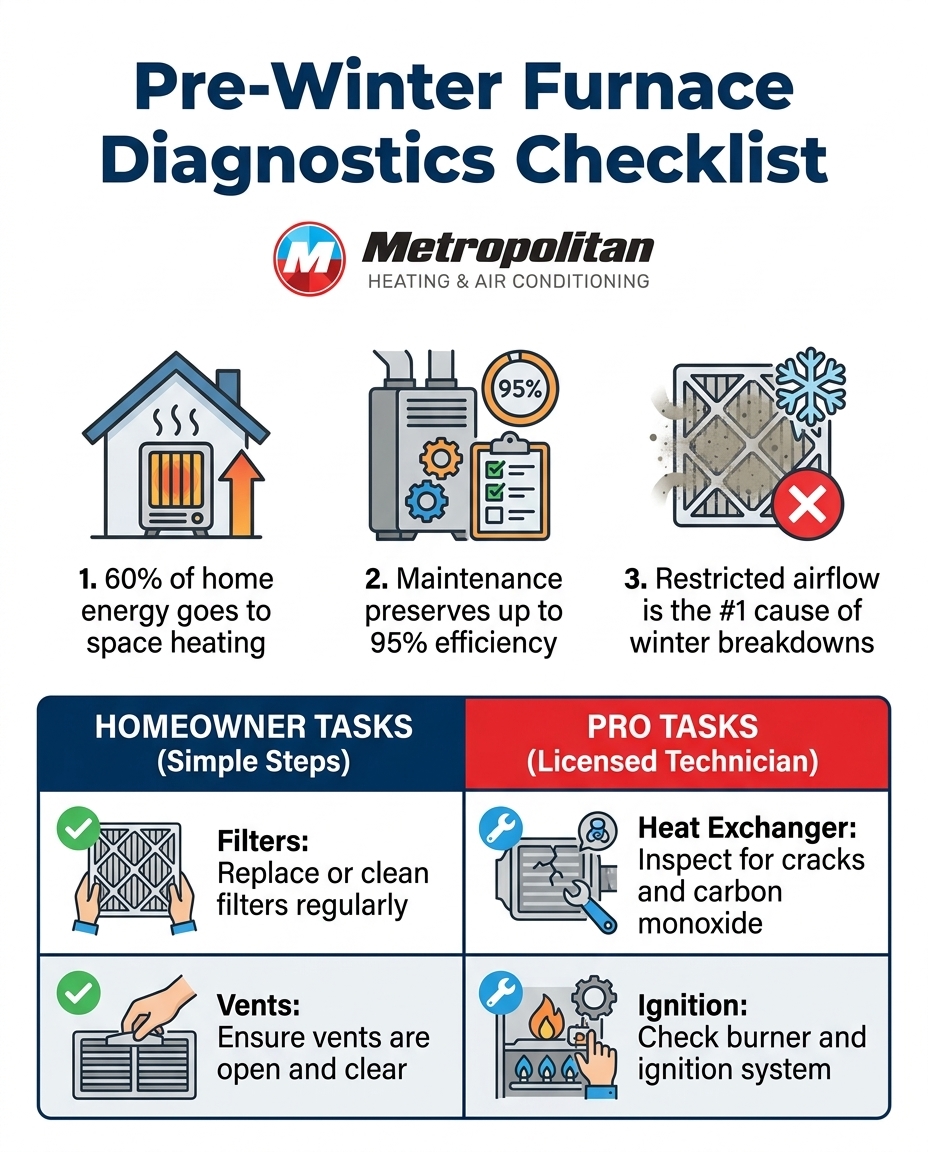
Space heating accounts for over 60% of the energy used in the average Canadian home, making the reliability of your furnace an absolute necessity rather than a luxury. When you are putting together a seasonal home maintenance checklist, the most critical item on that list is evaluating the condition of your primary heating equipment. A heating system that sits idle for months in a damp basement or utility room is highly susceptible to component degradation. When suddenly forced to run continuously, those dormant weaknesses quickly turn into mechanical failures.
The rapid transition into freezing temperatures across the Greater Toronto Area puts an immense, immediate load on these dormant heating systems. Homeowners often wait until the cold weather arrives to test their equipment, only to find that the unit cannot keep up with the sudden demand. Delaying professional diagnostics until a breakdown occurs frequently results in emergency no-heat situations exactly when you need warmth the most. For comprehensive heating services, scheduling an inspection early is the most effective way to protect your property. By identifying early warning signs, you can address vulnerabilities proactively and secure reliable Toronto HVAC services before the seasonal rush begins.
The right time to act is well before the first Scarborough winter freeze. Addressing the concrete problem of a furnace failing to safely handle sudden temperature drops requires making a timely decision to schedule a professional inspection. A proactive approach prevents minor wear and tear from cascading into a complete system shutdown when extreme weather finally hits.
The Mechanical Toll of the First Freeze on Your HVAC System
Sudden extreme cold forces your heating system into high-capacity operation, exposing hidden weaknesses in critical components. When the outdoor temperature plummets, your furnace must run longer and more frequently to maintain the set indoor temperature. This continuous operation acts as a stress test for every moving part, electrical connection, and safety sensor inside the cabinet.
To understand what happens inside the unit during that first Scarborough winter freeze, consider the mechanical sequence of a furnace firing up after months of inactivity:
1. Thermal Shock to the Heat Exchanger: The metal heat exchanger, which has been sitting at room temperature for months, is suddenly exposed to intense combustion heat. This rapid expansion and contraction can expose microscopic cracks in weakened metal.
2. Blower Motor Strain: Dust and debris settle on the blower motor and fan blades over the summer. When the motor engages, it must work harder to overcome this added weight and any friction from degraded bearings.
3. Ignition System Fatigue: Igniters and flame sensors can oxidize or accumulate carbon buildup during the off-season, leading to delayed ignition or premature system lockouts.
4. Airflow Resistance: Restricted airflow from neglected maintenance is the leading cause of winter breakdowns. When air cannot move freely over the heat exchanger, the system overheats and triggers the high-limit safety switch to shut the unit down.
Mechanical stress is significantly amplified in older units, where wear and tear on these specific components become critical failure points. This is especially true when comparing single-stage and two-stage furnaces, as older single-stage models blast full heat instantly, creating more abrupt mechanical stress. One local homeowner experienced this exact scenario when they had no heat a couple of weeks before December; fortunately, a technician was dispatched the same day and successfully repaired the furnace before the deepest cold arrived. Professional diagnostics ensure that these specific mechanical components are tested under simulated load conditions, catching faults before they cause a sudden shutdown.
Vulnerabilities in Ignition and Airflow
Ignition failures are incredibly common when sensors are dirty or misaligned after months of inactivity. A flame sensor's job is to detect whether a fire has successfully started; if it is coated in dust or oxidation, it will fail to read the flame and shut the gas valve off as a safety precaution. This results in a furnace that clicks, briefly fires, and then immediately turns off.
Furthermore, airflow restrictions force the unit to work harder, severely reducing both efficiency and lifespan. A clogged filter or blocked return vent means the blower motor must draw higher amperage to pull air through the system. This excess electrical draw generates heat, degrading the motor's windings and eventually leading to a complete motor failure.
Homeowner Maintenance vs. Mandatory Professional Diagnostics
A safe, warm home requires a clear understanding of where simple homeowner upkeep ends and mandatory professional diagnostics begin. Homeowners play a crucial role in preparing a property for winter, but certain mechanical evaluations require specialized training, advanced diagnostic tools, and proper licensing.
For residents in Scarborough residential areas, routine upkeep is the first line of defense. Regularly replacing air filters, ensuring that outdoor exhaust vents are clear of debris, and verifying that indoor supply registers are unblocked are all essential steps. Testing carbon monoxide and smoke detectors is also a mandatory safety requirement for every household.
However, tasks involving the heat exchanger, gas valves, and electrical relays must never be attempted as a DIY project. The internal combustion process of a gas furnace involves high-voltage electricity, explosive gases, and the production of carbon monoxide. Attempting to clean a burner assembly or adjust a gas valve without proper training can result in catastrophic safety hazards.
• Replacing the Air Filter — Who Should Perform It: Homeowner — Why It Matters: Prevents airflow restriction and protects the blower motor from overheating.
• Testing Carbon Monoxide Detectors — Who Should Perform It: Homeowner — Why It Matters: Provides an essential early warning system for dangerous gas leaks.
• Clearing Vents and Registers — Who Should Perform It: Homeowner — Why It Matters: Ensures balanced airflow and prevents the system from short-cycling.
• Inspecting the Heat Exchanger — Who Should Perform It: Licensed Professional — Why It Matters: Detects microscopic cracks that can leak lethal carbon monoxide into the home.
• Calibrating the Gas Valve — Who Should Perform It: Licensed Professional — Why It Matters: Ensures the correct fuel-to-air ratio for safe, efficient combustion.
• Testing Safety Limit Switches — Who Should Perform It: Licensed Professional — Why It Matters: Verifies that the furnace will safely shut down if it overheats or fails to draft properly.
A licensed technician possesses the tools, such as combustion analyzers and specialized inspection cameras, to detect microscopic cracks in the heat exchanger that pose severe carbon monoxide risks. Relying solely on a basic homeowner checklist leaves the most critical safety components of your heating system entirely unchecked.
The Ripple Effect of Heating Failures in Local Homes
A no-heat emergency is not just a comfort issue; it poses an immediate and severe threat to the home's structural and plumbing infrastructure. When a furnace shuts down during a deep freeze, the internal temperature of the home begins to drop rapidly. Homes with poor insulation or significant drafts lose residual heat at an accelerated rate, turning a mechanical failure into a race against the clock.
The localized risk of -30 windchill events in the region means that a home can reach freezing temperatures internally within a matter of hours. During one severe winter stretch with exactly these extreme windchill conditions, a local resident's rooftop furnace failed completely. Because of the immediate danger to the property, emergency service was dispatched, and a new unit was installed the next business day, allowing the customer to restore heat quickly and avoid secondary disasters.
The most significant secondary risk is to the plumbing system. Frozen and burst pipes can cause catastrophic water damage, destroying drywall, flooring, and personal belongings. Water lines running through exterior walls or unheated basements are particularly vulnerable. When the water inside these pipes freezes, it expands, exerting immense pressure on the copper or PEX tubing until it ruptures. Once the ice thaws, hundreds of gallons of water can flood the home.
For homeowners in Scarborough residential areas, proactive repair and maintenance act as an insurance policy against these cascading property disasters. Ensuring that your heating system is robust enough to handle continuous operation during extreme cold protects the entire physical envelope of your home.
Structuring a Proactive Preventative Maintenance Plan
Shifting the focus from reactive repairs to proactive solutions is the key to long-term heating reliability. Regular preventative maintenance can help a heating system maintain up to 95% of its original efficiency, keeping utility bills manageable even during the coldest months of the year.
A comprehensive approach goes far beyond a generic checklist. It involves systematic testing, cleaning, and calibration of all moving parts. When you invest in a structured preventative maintenance plan, a licensed technician will perform a deep dive into the mechanical health of your system. This rigorous process includes:
• Combustion Analysis: Testing the exhaust gases to ensure the furnace is burning fuel cleanly and efficiently, which also verifies that no carbon monoxide is spilling into the home.
• Static Pressure Testing: Measuring the airflow resistance within the ductwork to ensure the blower motor is not being overworked by hidden blockages or undersized returns.
• Electrical Component Inspection: Tightening loose wire connections and testing the microfarad readings on capacitors to prevent sudden electrical failures.
• Burner and Sensor Cleaning: Carefully removing oxidation and soot from the flame sensor and burner ribbons to ensure a smooth, reliable ignition cycle.
• Safety Control Verification: Manually tripping high-limit switches and draft safeguards to guarantee they will function correctly in an actual emergency.
Scheduling this service well before the first Scarborough winter freeze ensures the system is optimized for continuous winter operation. Consistent professional oversight extends the lifespan of the equipment, reduces the likelihood of mid-winter emergencies, and provides the peace of mind that your system is operating at peak safety specifications.
Navigating Unexpected Winter Repairs and Upgrades
Even with diligent preparation, a professional diagnostic visit may uncover severe mechanical wear that requires immediate attention. If an inspection reveals that a critical component is failing, immediate repair is necessary to ensure safe operation. Ignoring a technician's warning about a degraded part often leads to a complete breakdown on the coldest night of the year.
In cases where the heat exchanger is compromised on an older unit, replacement is often the safest and most efficient route. A cracked heat exchanger cannot be permanently patched or safely ignored, as it presents a direct carbon monoxide threat to the household. When faced with the need for a sudden replacement, understanding available avenues to manage the cost of major repairs or new installations provides significant peace of mind. Exploring furnace financing options can help bridge the gap, allowing you to upgrade to a high-efficiency system without compromising your household budget. Additionally, generally applicable energy rebates or tax credits for high-efficiency upgrades may be available through local utility programs, making a necessary replacement more manageable.
Partnering with a dedicated local team ensures that your home's safety is prioritized during peak emergency call periods. Working with a trusted local presence that possesses deep expertise in GTA residential systems means you benefit from emergency dispatch prioritization. For homes in Scarborough residential areas, having a reliable contractor who understands the specific demands of local weather patterns is invaluable when navigating unexpected winter upgrades.
Secure Your Home's Comfort Before the Cold Weather Settles In
A reliable heating system requires more than just a basic checklist; it demands professional oversight and technical precision. Addressing mechanical vulnerabilities now prevents emergency breakdowns, preserves system efficiency, and protects your home from the severe secondary damage caused by frozen pipes.
Do not wait for the first Scarborough winter freeze to test the limits of your furnace. Schedule a comprehensive inspection and diagnostic service today to ensure your equipment is operating safely and efficiently. Reach out to your local heating experts to secure a safe, warm, and comfortable winter season for your entire household.
Frequently Asked Questions
What is included in a comprehensive fall home maintenance checklist?
A comprehensive checklist bridges standard homeowner upkeep and professional diagnostics. It includes replacing air filters, clearing outdoor vents, and testing carbon monoxide detectors, alongside scheduling a licensed technician to inspect the heat exchanger, test safety switches, and calibrate the gas valve. Covering both simple upkeep and complex mechanical testing ensures total system reliability.
How do I prepare my furnace for a harsh Toronto winter?
Preparing your furnace requires ensuring unrestricted airflow and verifying mechanical integrity. Start by replacing the air filter and ensuring all household supply and return registers are fully open and unblocked by furniture. Next, schedule a professional preventative maintenance visit so a technician can clean the ignition sensors, test the blower motor, and verify the heat exchanger is free of dangerous cracks.
When should I schedule furnace maintenance in Ontario?
The optimal time to schedule furnace maintenance is in the late summer or early fall, well before the first freezing temperatures arrive. Booking early ensures your system is evaluated before the extreme cold forces it into continuous operation. It also allows you to secure an appointment before local HVAC companies enter their peak emergency service season.
What specific components should a professional check on a furnace before winter?
A licensed professional will focus on the components most susceptible to wear and safety risks. They must perform a visual and technical inspection of the heat exchanger, clean and test the flame sensor, verify the ignition sequence, and measure the electrical draw of the blower motor. They will also test all high-limit safety switches to ensure the unit will shut down if it overheats.
Can a dirty air filter cause a furnace to shut down?
Yes, a dirty air filter is one of the most common reasons a furnace shuts down during the winter. A clogged filter severely restricts airflow, causing the heat generated by the burners to build up inside the furnace cabinet. This excessive heat triggers the high-limit safety switch, which immediately shuts off the gas valve to prevent a fire hazard.
Why is it dangerous to attempt DIY repairs on a furnace heat exchanger?
The heat exchanger is the barrier separating the toxic combustion gases (including carbon monoxide) from the breathable air circulated throughout your home. Attempting DIY repairs on this component can easily result in improper sealing or overlooked microscopic cracks. Only a licensed professional has the specialized tools and training required to safely diagnose and address heat exchanger failures.
Schedule Expert Service
Or Contact Us
Other Blogs
testimonials
hear what our satisfied clients have to say

where we operate
Service areas
contact us
Let’s get in touch!