
## **Ultimate Furnace Repair Guide: Solutions & Expert Service**
A furnace failure is more than an inconvenience; it's a serious household problem. While many common heating issues can be diagnosed and safely addressed with the right approach, knowing when to call a professional for reliable furnace repair is key. This guide empowers Toronto, Durham and York Regions homeowners with practical troubleshooting steps, clear DIY diagnostics, and crucial safety insights for thermostat, power, airflow, ignition, and mechanical faults. You'll learn how to perform prioritized checks, pinpoint causes for cold air, understand what different noises indicate, and discover routine maintenance tasks that prevent recurring failures. We provide step-by-step troubleshooting, detailed diagnostic tables, and explicit signs that demand professional intervention. Throughout, we integrate climate-aware maintenance tips and clear guidance on when to contact a local service provider like Metropolitan Heating and Air Conditioning for expert gas furnace installation & service, ensuring your home stays warm and safe.

### **Furnace Won't Turn On? Quick Troubleshooting & When to Call a Pro**
A furnace that won't turn on often points to power, control, or ignition issues. Start by confirming your thermostat is calling for heat, then check household power and the furnace switch. Many failures are simple power or setting problems, not complex component breakdowns. These initial checks quickly narrow the fault, saving you time and money. If basic checks pass but your unit still won't start, it's time for a professional diagnostic to avoid electrical or gas hazards. Metropolitan Heating and Air Conditioning offers prompt **furnace repair** to get your heat back safely.
### **Thermostat Settings: Your First Check**
A misconpd thermostat is the simplest cause of a non-starting furnace. Confirm it's set to "Heat" or "Auto" and the setpoint is above room temperature. Replace batteries in wireless thermostats and verify smart thermostat status. A blank display might indicate 24V transformer issues or wiring faults, separating control problems from mechanical failures.
### **Verify Power Supply & Circuit Breaker Status**
Inspect electrical supply and protective devices. Ensure the furnace service switch is ON and check your home's circuit breaker panel for tripped breakers or blown fuses. Reset a tripped breaker once; if it trips again or you find damaged wiring, stop troubleshooting and call a qualified Metropolitan Heating and Air Conditioning technician to prevent electrical hazards.
**Quick In-Home Diagnostic Checklist:**
- **Confirm thermostat mode and setpoint**: Ensure "Heat" and higher than ambient.
- **Check power at furnace switch and breaker**: Verify service switch and reset breakers.
- **Inspect ignition indicators**: Listen for inducer motor, look for ignition attempts or error lights.
This checklist helps homeowners eliminate simple causes before inspecting internal components or calling for service, reducing unnecessary visits and focusing attention on likely failure points.
No-Start Furnace Diagnostic Table
| Component Checked | Attribute Checked | Pass / Fail Indicator |
| --- | --- | --- |
| Thermostat | Mode and setpoint | Pass = heat call visible / Fail = no call |
| Electrical supply | Furnace switch & breaker | Pass = power present / Fail = tripped or off |
| Ignition system | Inducer/ignitor activity | Pass = ignitor glows or pilot lights / Fail = no action |
### **Furnace Blowing Cold Air? Causes & Expert Solutions**
Cold air from your vents often signals restricted airflow, ignition failures, or safety shutdowns. Dirty filters, closed vents, or obstructed returns commonly restrict airflow, causing the furnace to cycle without producing heat. Ignition and flame-sensing problems prevent burners from lighting or staying lit. Gas supply and safety switch issues also prevent heating. Diagnosing these causes in order of likelihood speeds repair and reduces risk. For persistent issues, Metropolitan Heating and Air Conditioning provides comprehensive **furnace repair** to restore warmth.
### **Dirty Air Filter: A Common Culprit**
A dirty air filter restricts airflow, reducing heat transfer and often triggering high-limit switches that shut off burners. This leads to longer run times, short-cycling, increased blower strain, and reduced energy efficiency. Inspect your filter monthly and replace or clean it based on its rating and household factors like pets. Choosing the right MERV filter balances particle capture and airflow; overly restrictive filters can cause problems similar to a clogged unit. Keep filters clean to restore normal airflow, improve heat transfer, and extend component life.
- Filters affect both efficiency and safety by controlling airflow.
- MERV choices influence particulate removal and fan load.
- Check filters monthly and change sooner with high occupancy or pets.
Cold Air Troubleshooting Guide
| Component | Condition | Impact / Remedy |
| --- | --- | --- |
| Air Filter | Dirty → Restricted airflow | Replace filter; restore airflow |
| Ductwork | Blocked or closed vents | Open/clean ducts; balance registers |
| Blower Motor | Weak or failing | Clean motor; lubricate or replace if needed |
### **Pilot Light & Flame Sensor Problems**
For gas furnaces, a weak pilot or dirty flame sensor often causes the burner to fail or shut down, leading to intermittent heating. Electronic ignitors can also fail. Cleaning a flame sensor with fine steel wool can restore reliable sensing. However, repeated flame failures or damaged ignitors require component replacement by a qualified Metropolitan Heating and Air Conditioning technician. Always shut off gas and power before accessing combustion components, and stop immediately if you detect gas smells.
### **Decoding Furnace Noises: What They Mean & When to Call for Repair**
Furnace noises are often early warnings of mechanical wear or airflow problems. Squealing signals belt or motor bearing wear, grinding suggests failing bearings, rattling is usually loose panels or debris, and banging can mean delayed ignition or duct expansion. Regular inspection helps prioritize repairs. Simple panel tightening or lubrication might fix minor noises, but grinding or metal fatigue should prompt immediate professional evaluation to avoid catastrophic component failure. Metropolitan Heating and Air Conditioning provides expert [furnace repair](/heating/furnace-repair-service/) for all types of mechanical issues.
**Furnace Noise Diagnostic Table:**
| Component / Area | Symptom (Noise) | Likely Cause | DIY Check / Professional Action |
| --- | --- | --- | --- |
| Blower assembly | Squealing | Belt wear or motor bearing | Check belt tension; lubricate or call pro |
| Motor / Bearings | Grinding | Bearing failure | Stop unit; schedule professional motor replacement |
| Cabinet / Ducts | Rattling | Loose panels or debris | Tighten panels; remove debris and retest |
| Burner / Ignition | Banging / Popping | Delayed ignition or gas buildup | Do not run; call technician for safe inspection |
### **Identifying & Fixing Squealing, Grinding, or Rattling Noises**
Squealing often indicates belt slippage or worn blower bearings, potentially resolved by tightening/replacing belts or lubricating bearings. Grinding noises are serious, usually meaning failing internal bearings; power down the unit immediately and contact Metropolitan Heating and Air Conditioning for motor or bearing replacement. Rattling often comes from loose panels or debris; a quick inspection and secure fastening can fix it. If basic fixes fail, persistent mechanical noises require professional **furnace repair**.
### **Concerned About Furnace Cycling Noises?**
Short cycling—frequent on/off cycles—reduces efficiency and stresses components. Causes include oversized equipment, restricted airflow, or control board issues. Diagnose by checking filters, thermostat placement, and duct restrictions. Constant short cycles after DIY checks indicate a system mismatch or failing control component. Because short cycling shortens equipment life, resolve it promptly through airflow correction or professional tuning from Metropolitan Heating and Air Conditioning.
### **DIY Furnace Repair Steps: Safety First, Professional When Needed**
DIY repairs can safely address many minor furnace issues with a safety-first approach. Always cut power at the breaker and turn off the furnace service switch. If you smell gas or suspect a leak, evacuate and call emergency services immediately. Document symptoms and results for technicians. This disciplined approach reduces trial-and-error and increases the chance a professional can diagnose remaining issues faster. Remember, for complex issues or safety concerns, Metropolitan Heating and Air Conditioning is your trusted partner for **furnace repair**.
**Essential Safety Checklist Before DIY:**
- **Power off at the breaker and verify**: Always confirm power is removed with a tester.
- **Do not handle gas components if you smell gas**: Evacuate and call emergency services.
- **Ventilate and use CO detection**: Ensure carbon monoxide detectors are functional before re-powering.
Following these protocols protects you and isolates non-dangerous issues you can fix yourself, while making it clear when professional help is necessary for gas or major electrical faults.
### **Safety Precautions for Repairs**
Isolate power and gas to prevent electrocution or unintentional combustion. Never work on gas valves or combustion chambers if you detect any gas odor—shut off gas at the meter if trained, evacuate, and contact emergency responders or a qualified Metropolitan Heating and Air Conditioning technician. Use a carbon monoxide detector when powering the system back up. If uncertain, stop and request professional assessment to avoid health and safety risks.
### **Tools & Supplies for Basic Repairs**
### **When to Call Metropolitan Heating and Air Conditioning: Your Local Furnace Experts**

### **Advanced Furnace Issues: When Professional Help is Non-Negotiable**
### **Signs of Heat Exchanger Cracks or Gas Leaks**
Advanced issues present clear safety symptoms: carbon monoxide detectors activating, unexplained headaches or nausea, persistent rotten-egg gas smells, or yellow rather than steady blue flames at the burner. Visible rust, soot, or hairline cracks in the heat exchanger area also suggest structural failure. If you observe these indicators, evacuate, avoid operating the furnace, and arrange for certified inspection and repair from Metropolitan Heating and Air Conditioning to ensure occupant safety. We specialize in safe and reliable gas furnace installation & service.
### **Metropolitan Heating and Air Conditioning: Your Toronto Furnace Experts**
### **Preventing Furnace Problems in Toronto’s Climate with Regular Maintenance**
### **Homeowner Furnace Maintenance Checklist**
- Monthly: inspect filters and CO detectors.
- Quarterly: verify vents and clean accessible ducts.
- Annually: professional tune-up and combustion safety check (included in our service plan!).
### **Filter Replacement & Professional Tune-Ups**
This timing framework helps homeowners optimize filter life and ensure annual professional attention to combustion, electrical, and mechanical systems, reducing the likelihood of mid-season failures and maintaining energy-efficient operation. Don't forget to ask about [rebates](/promotions/)in new system replacement if your system is nearing the end of its life!
Schedule Expert Service
Or Contact Us
Other Blogs
testimonials
hear what our satisfied clients have to say

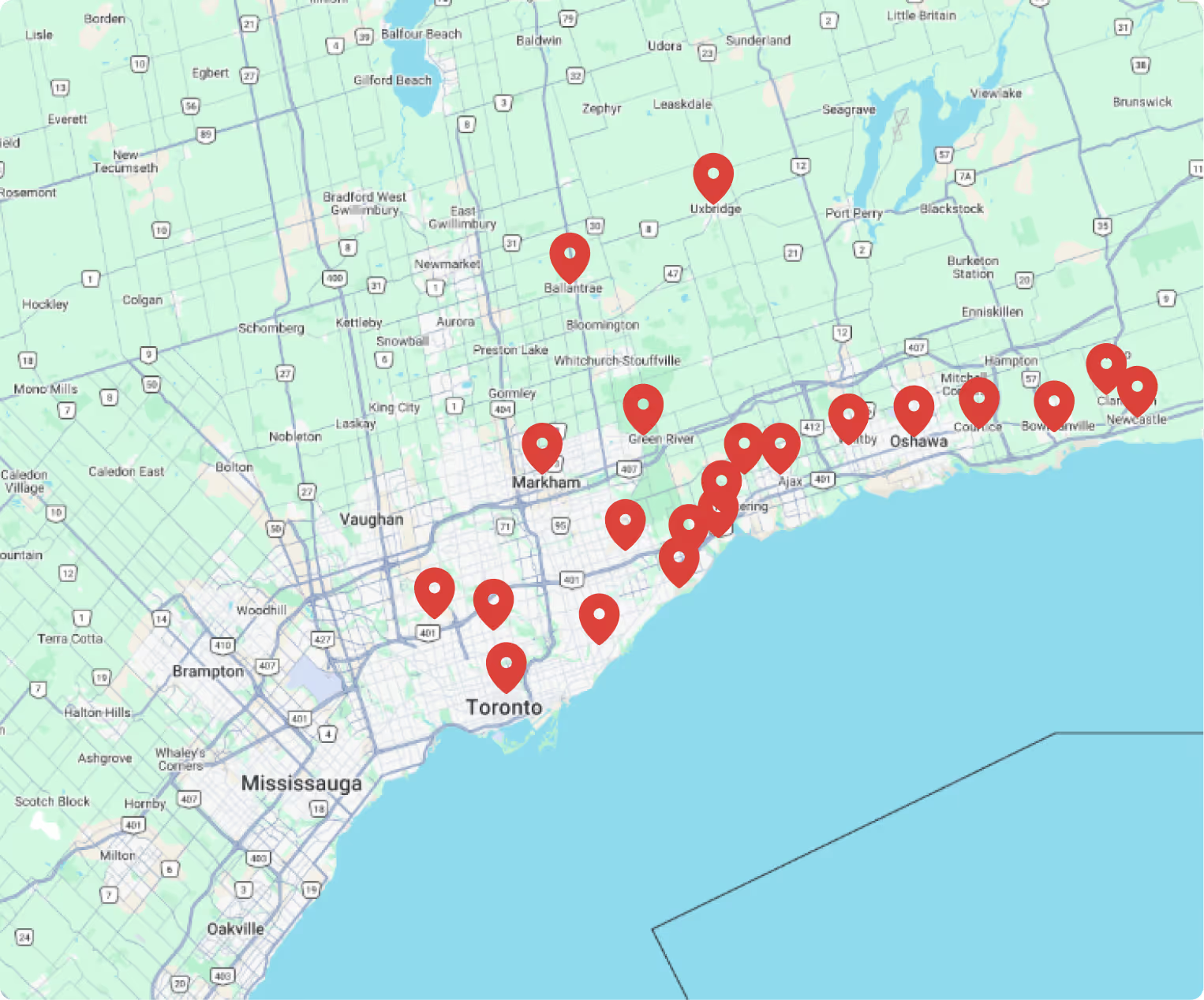
where we operate
Service areas
contact us
Let’s get in touch!