
## **How Water Heaters and HVAC Systems Interact in Your Home to Improve Energy Efficiency and Comfort**

When your water heater and HVAC system work together, you cut waste and feel more comfortable at home. This article explains how they interact, where separate systems lose energy, the benefits of integration, and simple maintenance steps. You’ll also see how energy-efficient tech can boost overall performance.
In many homes the two systems are installed and serviced as separate items, but they both contribute to the house’s overall thermal balance and monthly energy use. Thinking of them together shifts the focus from individual component efficiency to whole-home optimisation. That perspective helps prioritize upgrades, choose compatible controls, and plan maintenance that reduces downtime and unexpected costs.
## **What Are the Energy Inefficiencies in Separate Water Heater and HVAC Systems?**
Separate water heaters and HVAC systems often don’t communicate. That lack of coordination can waste energy and push up your bills. For example, a water heater set hotter than needed uses extra energy, but it usually won’t force the HVAC to run more since they operate independently.
Inefficiencies arise for several reasons: mismatched control strategies, overlapping runtime during peak demand, and simple standby losses from poorly insulated tanks or ducts. Even when each appliance operates near its rated efficiency, the combined behaviour can leave energy on the table because one system’s operating pattern creates conditions that make the other work harder.
### **How Do Independent Systems Affect Your Home's Energy Bills?**
Independent systems tend to raise energy bills because they don’t coordinate. A hotter-than-needed water heater wastes energy, but the HVAC won’t always compensate. Estimates that bills are 20–30% higher without integration aren’t solid for every home—results vary by usage and system type. Still, integrating systems and adding advanced controls can improve energy management and cut costs.
In practice, lack of coordination shows up as overlapping peak loads (both heating and hot-water demand at the same time), inefficient standby operation, and missed opportunities to shift usage to lower-cost times. Behavioural factors—like long, hot showers during periods of high heating demand—also influence bills. Addressing both equipment settings and occupant habits often yields the best savings.
### **What Common Signs Indicate Inefficient Heating and Water Systems?**
Look for inconsistent water temperature, fluctuating indoor temperatures, and unusually high energy bills. If your water heater runs out of hot water often or your HVAC can’t hold a steady temperature, the systems may not be working together. Fixing these issues usually improves comfort and efficiency.
Practical on-the-ground signs to watch for include:
- Short cycling of the water heater or furnace (frequent on/off cycles).
- Rooms that heat or cool slowly after settings change.
- Higher-than-usual gas or electricity use on the utility bill without a clear explanation.
- Unexplained condensation near equipment or ducts, which can indicate poor control or airflow.
## **What Are the Benefits of Integrating Water Heaters with HVAC Systems?**

Integration boosts energy efficiency, evens out indoor temperatures, and can lower bills. When systems share data and operate together, they meet heating and hot-water demand with less wasted energy. The result is a more balanced home climate and potential savings.
The concept of combined space and water heating systems, often referred to as combi systems, exemplifies this integration by using a single heat source for both functions.
Beyond direct energy savings, integration often lowers maintenance complexity because shared controls and monitoring make fault detection easier. Homeowners may notice fewer peak-demand spikes, improved system longevity from gentler cycling, and a shorter list of routine tasks when a holistic maintenance plan is adopted.
### **How Does Integration Enhance Home Energy Efficiency?**
Integration lets systems share data and run in sync. A smart thermostat can change water-heater settings based on HVAC needs so energy is used only when necessary. Studies show integrated systems with smart controls and efficient units can improve efficiency by up to 20–30%, depending on the technology and home layout. That can lower both energy costs and emissions.
Integration strategies include prioritising comfort zones, staggering equipment runtimes to avoid simultaneous peaks, and using schedule-based control to preheat or pre-cool when grid demand is lower. Many integrated control systems also log runtime and temperature trends, which helps technicians fine-tune operation during service visits.
### **What Comfort Improvements Can You Expect from Integrated Heating Systems?**
Integrated systems deliver steadier temperatures and fewer hot or cold spots. They also react faster to temperature changes, so your home feels comfortable sooner. Many customers report noticeably better comfort after integration.
In practice, that means morning warm-up times are reduced, hot-water availability is more consistent during periods of simultaneous demand, and room-to-room temperature differences narrow. For households with children or elderly residents, the perceived improvement in comfort and predictability can be especially valuable.
## **How Can You Identify If Your Water Heater and HVAC Systems Are Not Working Together Efficiently?**
Catching inefficiencies early keeps repair bills down and performance up. Regular checks and simple monitoring reveal problems before they get worse. Watch for odd noises, uneven heating or cooling, and systems that cycle frequently.
Homeowners can perform a few basic checks without special tools: note how quickly the house reaches the setpoint, record hot-water delivery during peak use, and compare recent bills month to month after adjusting thermostats. If behaviour doesn’t match expectations, document times and conditions to share with a technician.
### **Which Performance Issues Signal Poor System Interaction?**
Common signs include inconsistent water temperature, HVAC units that run longer than needed, and water heaters that cycle on and off often. These issues increase wear, raise maintenance costs, and shorten equipment life. Regular inspections let you intervene before small problems become major ones.
Typical causes and possible first responses:
- Short cycling — often caused by oversized equipment or faulty controls; ask a technician to verify sizing and control settings.
- Cold spots — check insulation and airflow; balance vents and look for blocked returns.
- Hot-water shortage during peak usage — consider demand management, a larger storage tank, or point-of-use solutions.
- Frequent simultaneous demand spikes — a control strategy that staggers runtimes can prevent overload and reduce peak charges where applicable.
### **How Often Should You Inspect and Maintain Integrated Systems?**
Schedule inspections at least once a year. Routine tasks—like cleaning filters, checking for leaks, and testing controls—help extend the life of both systems. A simple maintenance routine prevents breakdowns and keeps performance steady.
In addition to annual professional inspections, a few seasonal checks help maintain efficiency: inspect air filters monthly during heavy use, confirm thermostat schedules at the start of each heating and cooling season, and visually inspect the water heater area for leaks or corrosion quarterly.
## **What Are the Best Maintenance Practices for Integrated Water Heater and HVAC Systems?**
Follow a proactive maintenance plan to maximise efficiency and lifespan. Regular service stops small issues from becoming big repairs and keeps both systems running well. Book routine checks and address problems as they appear.
A practical maintenance checklist for homeowners and service providers includes the following items. Many can be done by the homeowner between professional visits; others should be done by a technician.
- **Monthly or quarterly:** Inspect and replace HVAC filters; verify thermostat function and schedules; check visible ducts and pipe insulation for damage.
- **Biannually:** Test system safety controls, verify refrigerant charge on air conditioners, and inspect burner or heat-exchange surfaces where applicable.
- **Annually:** Flush tank-type water heaters to remove sediment, inspect the anode rod if accessible, check pressure-relief valves, and perform a full HVAC tune-up including blower and motor inspection.
- **As needed:** Repair leaks, reseal duct joints, upgrade insulation, and replace controls or sensors that show drift or failure.
Documentation helps track maintenance: keep a simple log with dates, performed tasks, and observations so trends are visible over time. That log makes seasonal tuning and future troubleshooting faster and more accurate.
### **How Do Regular Maintenance Plans Prevent Costly Breakdowns?**
Regular maintenance catches leaks, worn parts, and other faults before they fail. That lowers the chance of expensive repairs and extends equipment life. Homeowners who keep up with maintenance usually pay less over time.
A maintenance plan also simplifies budgeting since many providers offer scheduled visits and predictable fees. When technicians monitor systems on an ongoing basis, small inefficiencies are corrected quickly, avoiding the cascade of repairs that follows an unexpected failure.
### **What Does a Comprehensive Home HVAC System Maintenance Include?**
A thorough plan covers filter inspection and cleaning, thermostat checks, and system diagnostics. For the water heater, check for corrosion or leaks and flush the tank to remove sediment. These steps keep systems efficient and reduce surprise failures.
Comprehensive service should also include airflow measurement and ductwork inspection, combustion analysis where gas-fired equipment is present, and a review of control logic when smart thermostats or integrated controllers are installed. These deeper checks ensure both safety and efficiency.
## **How Do Energy-Efficient Water Heaters and Smart Controls Improve System Integration?**
Efficient heaters and smart controls enable better communication between systems. That improves energy management and comfort. Upgrading components can make your whole system work smarter and use less energy.
When older equipment is paired with modern control systems, it often performs noticeably better without a full equipment replacement. Simple upgrades—like adding a programmable or smart thermostat, insulating hot-water pipes, or installing a demand-controlled circulator—can produce meaningful gains in day-to-day performance.
### **What Role Do Tankless Water Heaters and ENERGY STAR Units Play?**
Tankless units and ENERGY STAR models deliver hot water on demand while cutting energy use versus older models. Paired with HVAC integration, they offer a more sustainable, cost-effective heating solution.
Tankless systems reduce standby losses and can be paired with control strategies that minimise simultaneous demand peaks. ENERGY STAR-labelled equipment typically meets higher efficiency and testing standards, and selecting properly sized units ensures those efficiency gains translate into real household savings.
### **How Does Smart Thermostat Integration Optimize Heating Performance?**
Smart thermostats let you control systems remotely and set efficient schedules. They learn habits and adjust settings to save energy. When linked to water heaters, they help maximise savings and comfort.
Practical smart-thermostat features include adaptive scheduling, geofencing to lower settings when the house is empty, and integration with occupancy sensors to reduce conditioning of unoccupied zones. When combined with water-heater controls, these features enable coordinated behaviour that reduces both peak demand and wasted runtime.
## **What Financing and Promotion Options Are Available for Upgrading to Integrated Heating Systems?**
Upgrading can be costly up front, but financing and promotions can make it manageable. Look into available plans and offers to reduce the initial expense.
Typical financing choices include low-interest loans, instalment plans, and manufacturer or dealer promotions that lower initial costs or bundle equipment and installation. When evaluating options, compare total repayment costs and any required maintenance commitments.
### **How Can Flexible Financing Make Energy-Efficient Upgrades Affordable?**
Flexible financing spreads the cost over time so upgrades are easier to afford. Many providers offer low-interest loans or payment plans that keep monthly budgets steady while you gain efficiency benefits.
A cost-benefit view helps: estimate expected savings from lower energy use and reduced maintenance to understand payback timelines. In many cases, modest monthly payments are offset by smaller utility bills and fewer emergency repairs.
Explore our [financing options](/financing) to make upgrading your systems more affordable.
### **What Current Promotions Does Metropolitan Heating and Air Conditioning Offer?**
Metropolitan Heating and Air Conditioning often runs promotions on integrated systems and maintenance plans. These can include installation discounts or special financing for eligible customers. Ask about current offers to see available savings.
Promotions change seasonally; when contacting the company, request details about eligibility, included services, and any limits on combined offers so you can make an informed decision.
Check out our latest [promotions](/promotions)to save on your next service.
## **How Does Metropolitan Heating and Air Conditioning Support Homeowners in the Greater Toronto Area?**
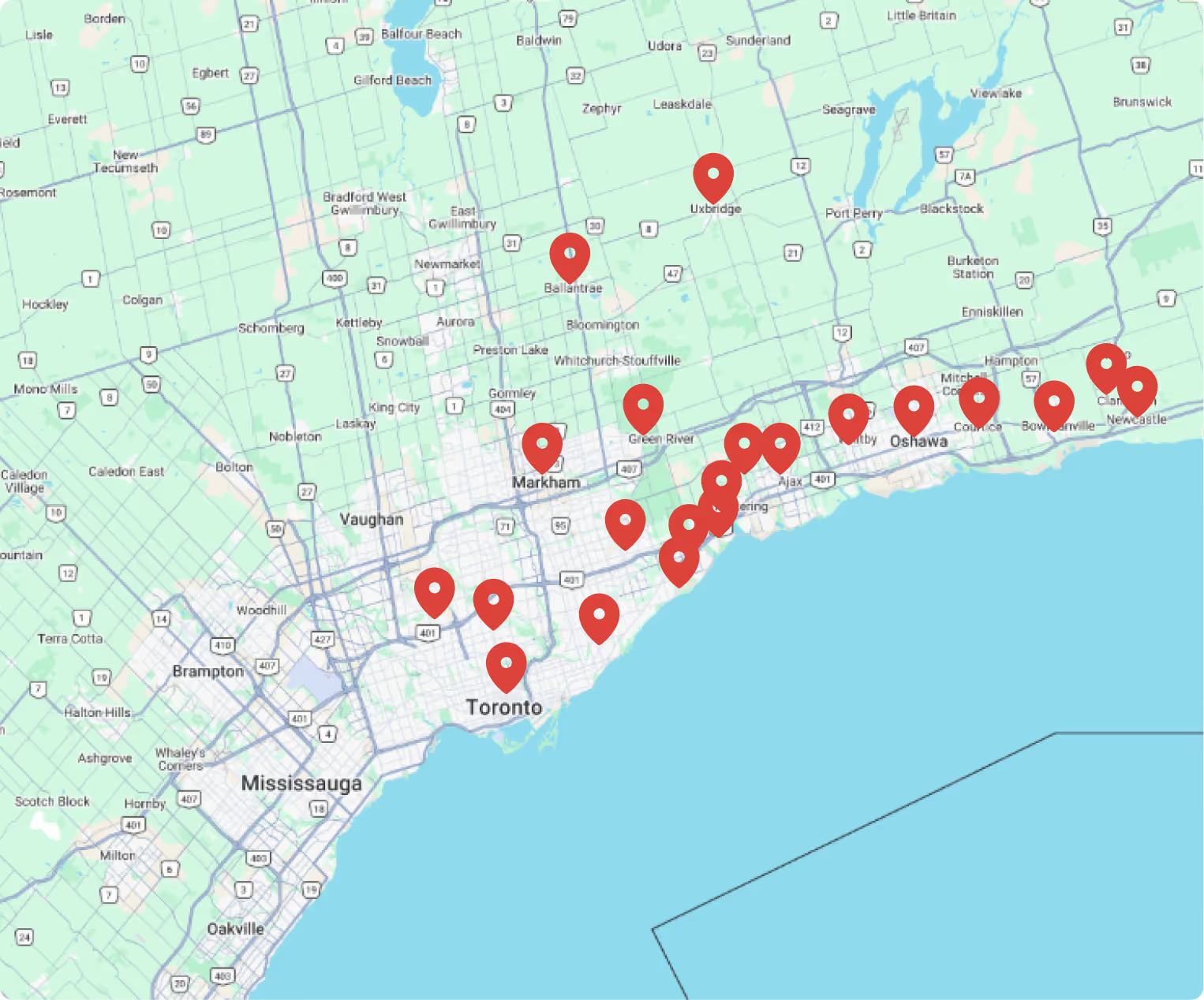
Metropolitan Heating and Air Conditioning supports Greater Toronto Area homeowners with HVAC and water-heater services. Our team focuses on integrated solutions that fit each home’s needs.
Support typically begins with a site visit and assessment that reviews equipment age, control compatibility, and insulation or ductwork condition. From that assessment we recommend staged upgrades that align with the homeowner’s budget and comfort goals, and we outline the expected impacts of each option.
### **Why Choose Our Trusted Local Service for HVAC and Water Heater Integration?**
Choosing a local, experienced team gives you peace of mind. We know GTA homes and work to deliver reliable, high-quality service. We focus on your satisfaction and on keeping systems efficient.
Local service also means technicians who understand local codes, common construction types, and seasonal load patterns. That contextual knowledge leads to better recommendations and fewer surprises during installation or maintenance.
### **How Do Our Customized Maintenance Plans Enhance System Reliability?**
Our tailored maintenance plans match each home’s needs so systems run at peak performance. Regular, customised service helps extend equipment life and improve energy efficiency.
Consider investing in a [maintenance plan](/plans)to keep your systems running smoothly.
### **Frequently Asked Questions**
#### **What are the signs that my water heater and HVAC systems need to be integrated?**
Signs include uneven indoor temperatures, high energy bills, and frequent cycling of either system. If your HVAC can’t hold a steady temperature or your water heater runs out of hot water quickly, integration may help improve efficiency and comfort.
If you notice these signs consistently, document the timing and conditions—such as time of day or simultaneous heavy use—and share this information with a technician to help diagnose potential interaction issues.
#### **How can I improve the efficiency of my existing water heater and HVAC systems without replacing them?**
Improve efficiency with regular maintenance: clean filters, fix leaks, and add proper insulation. Install a smart thermostat to optimise settings based on your routines. Upgrading specific components—like low-flow fixtures or timers—can boost performance without a full replacement.
Small changes often produce meaningful results: lower the water-heater thermostat a few degrees if safe, add pipe insulation, and seal ductwork. Incremental improvements make a larger upgrade easier to plan and afford.
#### **What types of energy-efficient technologies should I consider for my home?**
Consider tankless water heaters, ENERGY STAR-rated appliances, and smart home systems for remote monitoring and control. Solar water heating is another option that can lower energy costs and increase sustainability.
Each technology has trade-offs: tankless units reduce standby loss but may require larger gas or electric service; ENERGY STAR appliances meet strict efficiency criteria; and smart systems improve control but require reliable connectivity. Discuss options with a technician to match technology to your home.
#### **Are there specific maintenance tasks for integrated systems that differ from traditional systems?**
Yes. For integrated systems, check communication between smart thermostats and both systems, verify settings for efficiency, and inspect shared components for wear. Regularly flushing the water heater to remove sediment is also important.
Additionally, ensure any integration controller or gateway is updated and backed up where possible, and test override or fallback modes so the systems remain functional if a controller or network is unavailable.
#### **How can I determine if my current systems are compatible for integration?**
Have a professional technician assess your systems’ age, type, and efficiency ratings. They’ll review specifications and recommend any upgrades or modifications needed for effective integration.
Compatibility checks typically include reviewing control protocols (for example, whether equipment accepts common thermostat signals), available communication ports, and whether older equipment can safely operate with newer control logic.
#### **What are the potential cost savings from integrating my water heater and HVAC systems?**
Integration can produce notable savings, potentially reducing energy costs by 20–30% in some cases. Optimised operation and reduced wear on equipment can also lower maintenance expenses and extend system life.
Actual savings depend on home size, occupancy patterns, the efficiency of existing equipment, and local energy prices. A targeted assessment will provide a clearer estimate for your specific situation.
### **How Do Water Heaters Affect HVAC Efficiency?**
Water heaters add to total energy use but usually run separately from HVAC systems. Linking them with smart controls can improve overall energy management and help lower heating and cooling costs.
For example, a hot-water leak or failing element can increase electrical demand, which may coincide with HVAC runtime and push the home into higher peak usage. Monitoring and managing both loads reduces such interactions and smooths overall consumption.
### **What Are the Benefits of Integrated Heating Systems?**
Integrated systems improve energy efficiency, enhance comfort, and can reduce utility bills. Coordinated operation helps create a more stable indoor environment and reduces waste.
Other benefits include simplified diagnostics, fewer vendor handoffs during service, and clearer upgrade pathways that prioritise whole-home performance rather than isolated equipment metrics.
### **How Often Should I Service My Water Heater and HVAC Systems?**
Service both systems at least once a year. Regular servicing keeps performance steady and helps catch problems before they become costly.
Some tasks are best scheduled seasonally: air-conditioning checks in spring, furnace checks in fall, and a water-heater flush once a year. Keeping a calendar reminder reduces the chance of missed service.
## **Conclusion**
Integrating your water heater and HVAC system can increase efficiency, improve comfort, and lower utility costs. Understanding how system interaction works helps you make better choices for long-term savings. Reach out for a cnosultation to learn how our solutions can optimise your home’s energy performance and comfort.
If you are considering integration, start with a baseline assessment—meter readings, a brief inspection, and a discussion of household usage patterns. That information creates a clear roadmap for upgrades, financing, and expected outcomes.
Want to learn more about our services or schedule a consultation? [contact us](/contact/)today.
Schedule Expert Service
Or Contact Us
Other Blogs
testimonials
hear what our satisfied clients have to say

where we operate
Service areas
contact us
Let’s get in touch!